Novosibirsk Lifts Quarantine That Led to Mass Cattle Culls
Authorities in Russia's Novosibirsk region have ended quarantine restrictions that earlier this year prompted the culling of about 90,000 cattle across nine regions. The restrictions were imposed following claims of an unusual form of infectious disease.
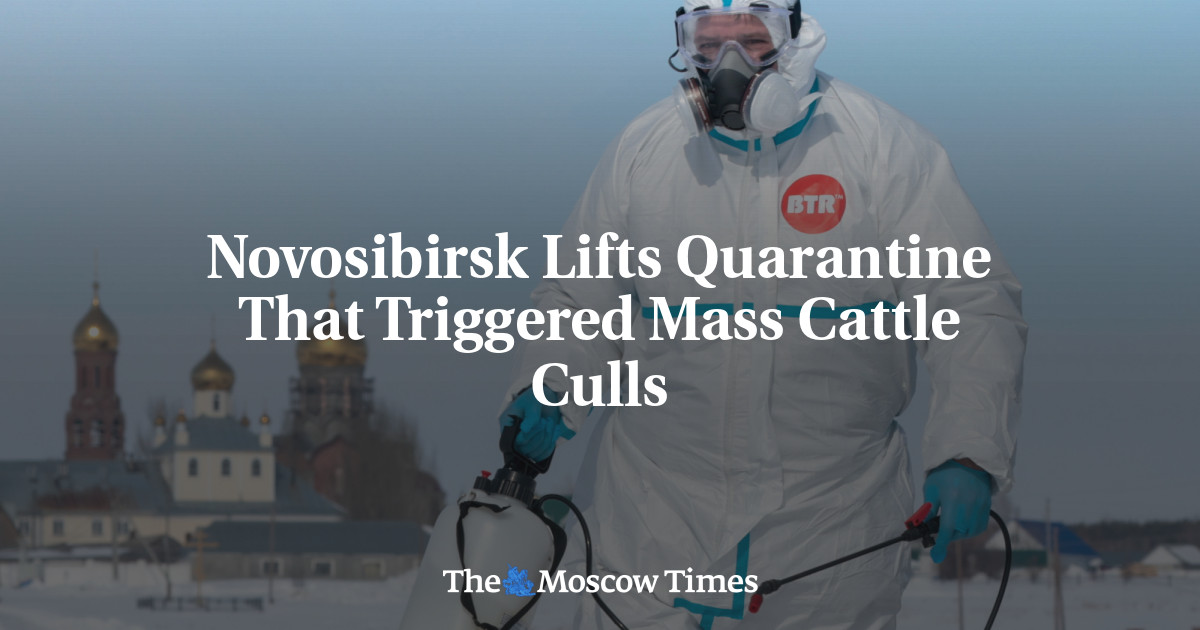
Authorities in the Novosibirsk region have lifted quarantine measures that were introduced in response to an alleged unusual form of an infectious disease and that triggered a government-ordered mass culling of cattle earlier this year.
Between February and March, approximately 90,000 cattle were culled across nine Russian regions, including Novosibirsk. Russian officials attributed the drastic measures to rabies and an "unusual mutated form" of pasteurellosis.
In Novosibirsk alone, analysts estimate that half of the 6,800 cattle on affected farms were slaughtered, resulting in losses exceeding 235 million rubles ($3.1 million).
"All quarantine restrictions previously introduced due to an infectious disease among livestock have been officially lifted," the regional agriculture ministry announced on Friday. The head of its veterinary department said beef, other animal meat, and products that have passed veterinary inspection could now be sold freely throughout the Novosibirsk region.
The ministry also allowed the transportation of livestock across the region under the close supervision of veterinary specialists. Unhindered transportation and sale of live animals and animal products outside the Novosibirsk region will be permitted after veterinary specialists restore its health status.
Despite authorities' claims, the U.S. Department of Agriculture's Foreign Agricultural Service suggested the culls may have actually been a response to an unconfirmed outbreak of foot-and-mouth disease, a highly contagious and often fatal virus. That theory gained traction after Kazakhstan banned imports of Russian meat and livestock. Russia's agriculture watchdog has dismissed the allegation.