OpenAI Again Pushes for Sharing Health Records with ChatGPT
OpenAI expands ChatGPT Health to US users 18+, allowing the chatbot to reference personal medical data in conversations, while facing lawsuits over alleged harmful advice.
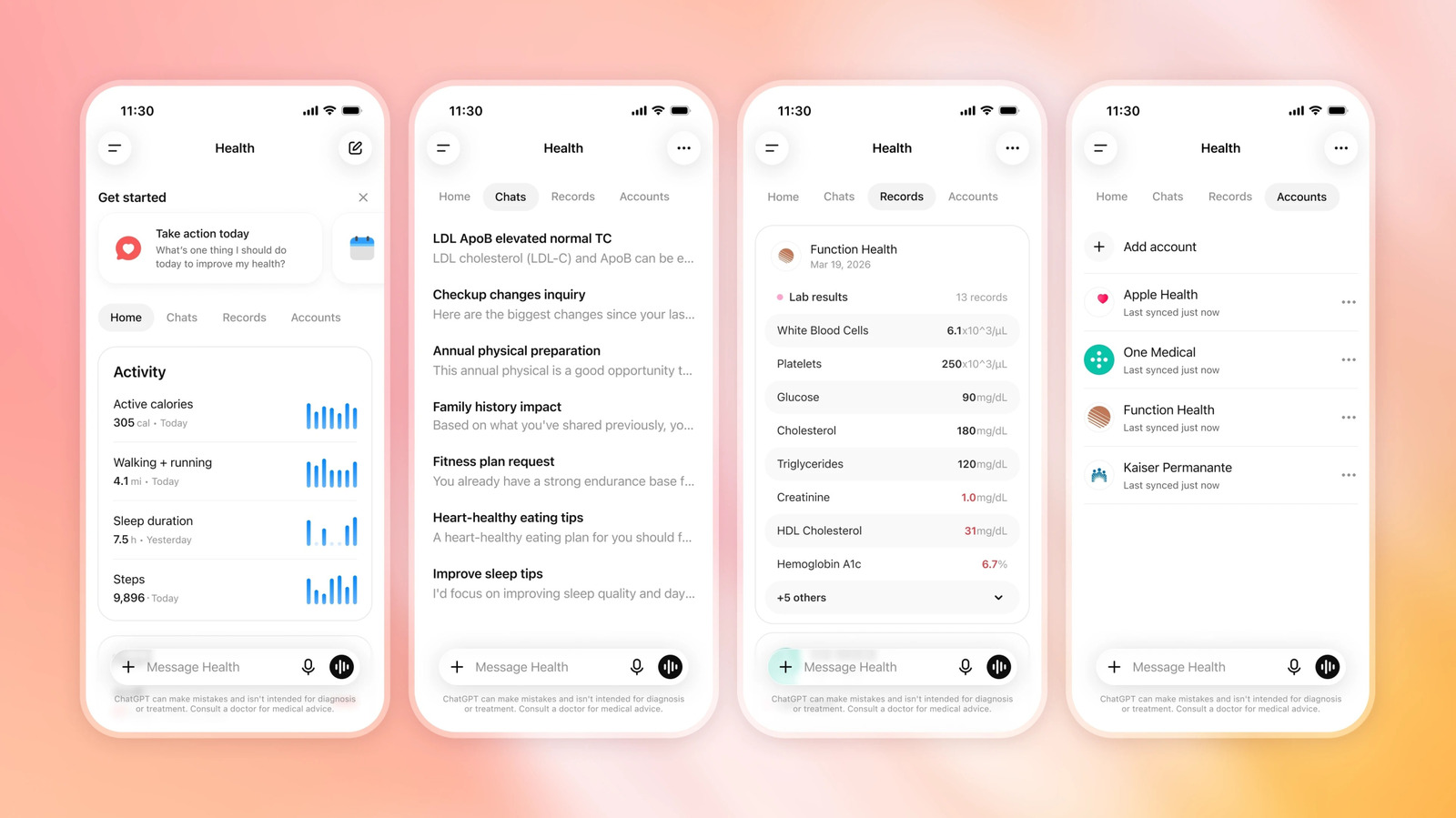
OpenAI is rolling out an updated version of ChatGPT Health, now available to users in the US who are 18 years or older. Initially tested in a separate portal in January, the feature now allows the chatbot to pull relevant health data into any conversation. This goes beyond answering general health questions — OpenAI claims its new GPT-5.6 Sol model improves accuracy by grounding responses in personal data such as doctors' notes, blood tests, and more.
Users can connect their data through ChatGPT's new Health tab, which guides them to link the chatbot with Apple Health (via HealthKit) or providers like Kaiser Permanente and One Medical. ChatGPT may also ask users to review current conditions, medications, and family medical history to ensure correct interpretation. Afterward, the Health tab lets users browse records, view recent health trends, and see suggested prompts, but the main feature is real-time access to health data in any chat.
OpenAI carefully frames responses as summaries of appointments, explanations of test results, and aids to becoming a better patient, but users can still ask for more direct advice. The company warns that ChatGPT can make mistakes and its output should not be considered a diagnosis or official treatment. Privacy is a key concern: OpenAI states that medical information is not used to train foundation models or target ads, regardless of user settings. Users can control when ChatGPT uses connected health data and disconnect it at any time.
The timing of the announcement is awkward due to ongoing lawsuits. A pastor is suing OpenAI, alleging ChatGPT gave dangerous medical advice that led him to avoid treatment for a pulmonary embolism. The company is also in a separate legal dispute with Apple, making reliance on Apple Health as a major data source uncomfortable. While OpenAI cannot control its legal battles, users can decide whether they are comfortable sharing medical information with the chatbot.