Orangutans prefer food associated with sounds of laughter
A study of six captive orangutans suggests the animals value food more highly when it is linked to the laughter of their peers. Researchers say emotional state during learning may shape later choices.
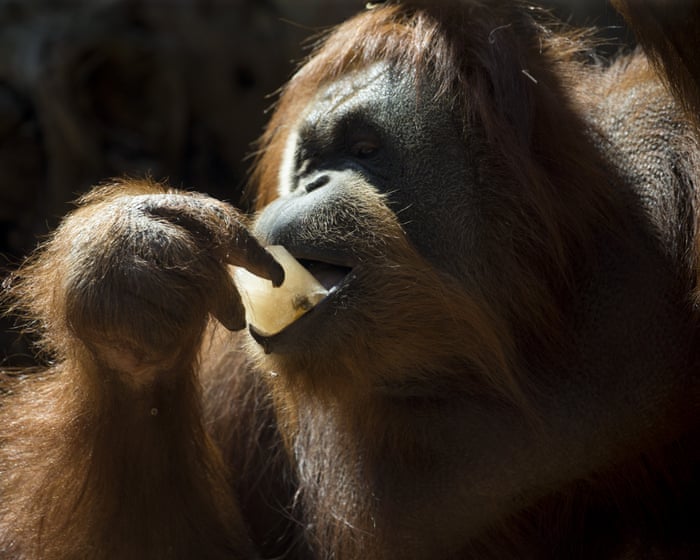
Scientists studying captive orangutans have found that the great apes value food more highly if they heard other orangutans laughing before searching for it. The research, published in the journal Biology Letters, suggests the animals' food choices are influenced by whether others appear to be having a good time.
Erica Cartmill, a professor of anthropology and cognitive science at Indiana University and senior author of the work, said the study belongs to a wider project. It examines whether animals feel joy and how such emotions affect cognition and learning. She noted that human research shows emotion strongly influences rational thought, and the team wanted to apply that idea to animals.
How the experiment worked
Six orangutans at two zoological institutions took part. They were first trained to search bowls for food treats. Each animal was then shown two bowls: one held a tasty morsel buried under a harmless substance such as moss or sawdust, while the other held a different material and no treat.
Just before the bowls were presented, the animals heard a recording of either orangutans playing and laughing or environmental sounds such as wind. Which recording was played depended on which of the two covering substances was used that day.
On the fifth day, both bowls contained a treat, each buried under one of the two substances, and the orangutans were asked to choose. Across multiple trials, the apes generally preferred the bowl with the substance linked to laughter. Four of the six showed a clear preference.
What it may mean
Cartmill said the preference could stem from laughter putting the orangutans in a more positive emotional state while they learned to associate the substance with food. In her view, the quantity or frequency of a reward is not the only thing that matters; the animal's state during learning counts too.
Dr Adriano Lameira, a primatologist and evolutionary psychologist at the University of Warwick who was not involved in the research, called the results fascinating.
Cartmill added that the findings could be relevant to people, including in education. Students may learn at similar rates whether or not they are in a good mood, she said, but may value information more if they learn it in a good mood. That could help explain why some information is trusted more, or why students choose to continue with certain subjects.