Bacteria suspected in deaths of hundreds of whale calves in Patagonia
Since June, hundreds of southern right whale calves have died in Argentine Patagonia, with scientists investigating a bacterial infection as a possible cause. Authorities say the die-off does not currently threaten the wider whale population.
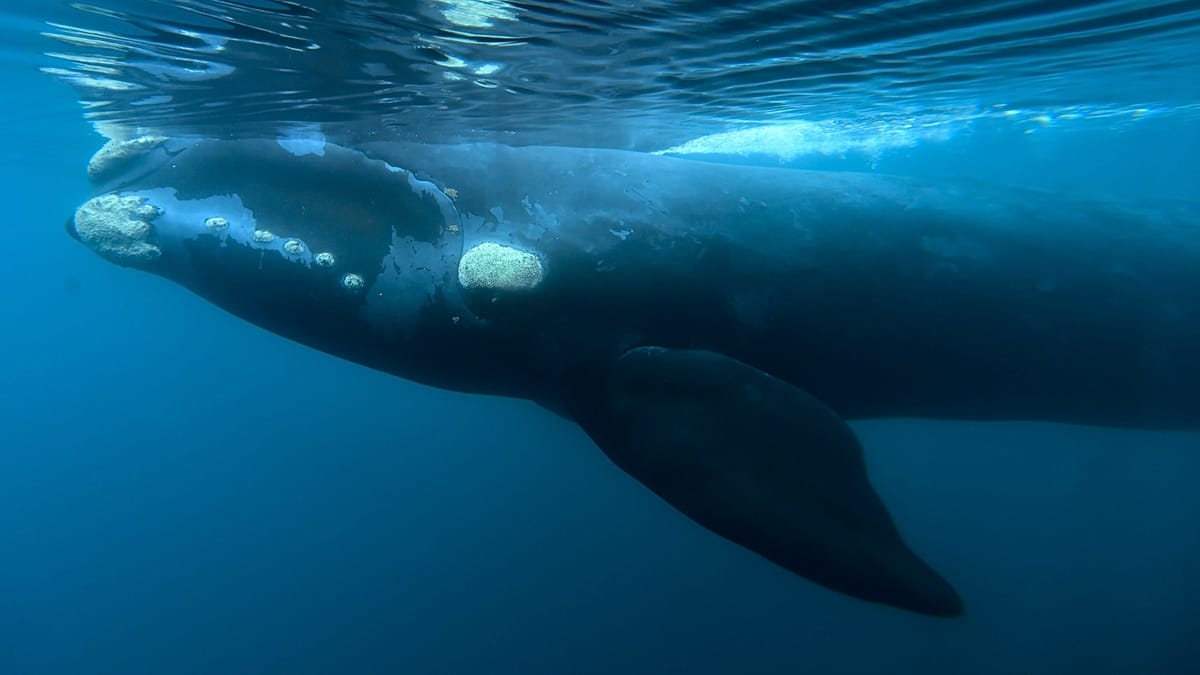
An unusually high number of southern right whale calves have died this season in Chubut province, southern Argentina, alarming scientists and local authorities. Since June, hundreds of dead calves have washed up on local beaches, including dozens just this week.
The area around Puerto Madryn and the nearby Valdés Peninsula is one of the main breeding grounds for southern right whales in the South Atlantic, drawing large numbers of the animals each year to mate and raise their young.
Bacteria among the top suspects
Mariano Coscarella, a researcher at the Marine Mammals Laboratory of Argentina's National Scientific and Technical Research Council (Conicet), said calf mortality is notably high this season. Veterinarians are examining whether erysipelas — an infectious disease caused by bacteria commonly found on the skin of these mammals — is responsible. Initial analysis by Chubut authorities points to a common marine bacterium, though the investigation remains open to determine the exact cause.
Coscarella said current evidence points toward a natural cause, though a possible role of human activity cannot be entirely ruled out. The provincial government says it is working with the scientific community to identify the source of the deaths.
Population not yet at risk
Adult southern right whales can grow to about 17 metres and weigh around 40 tonnes. A record 2,110 whales were counted in the area in 2025, roughly 800 of them juveniles. This year's count stands at 1,375 animals, including nearly 400 calves.
Despite the elevated death toll this season, Coscarella noted the episode does not currently pose a medium-term threat to the region's whale population, partly due to the species' long lifespan. Local authorities estimate southern right whales can live around 60 years.