Study: warming likely worsened deadly glacier collapse in Nepal
An international research team has found that climate-driven warming likely contributed to the late-August mountainside and glacier collapse in Nepal that killed more than 1,300 people. Researchers stress warming was not the direct cause but amplified existing geological instability.
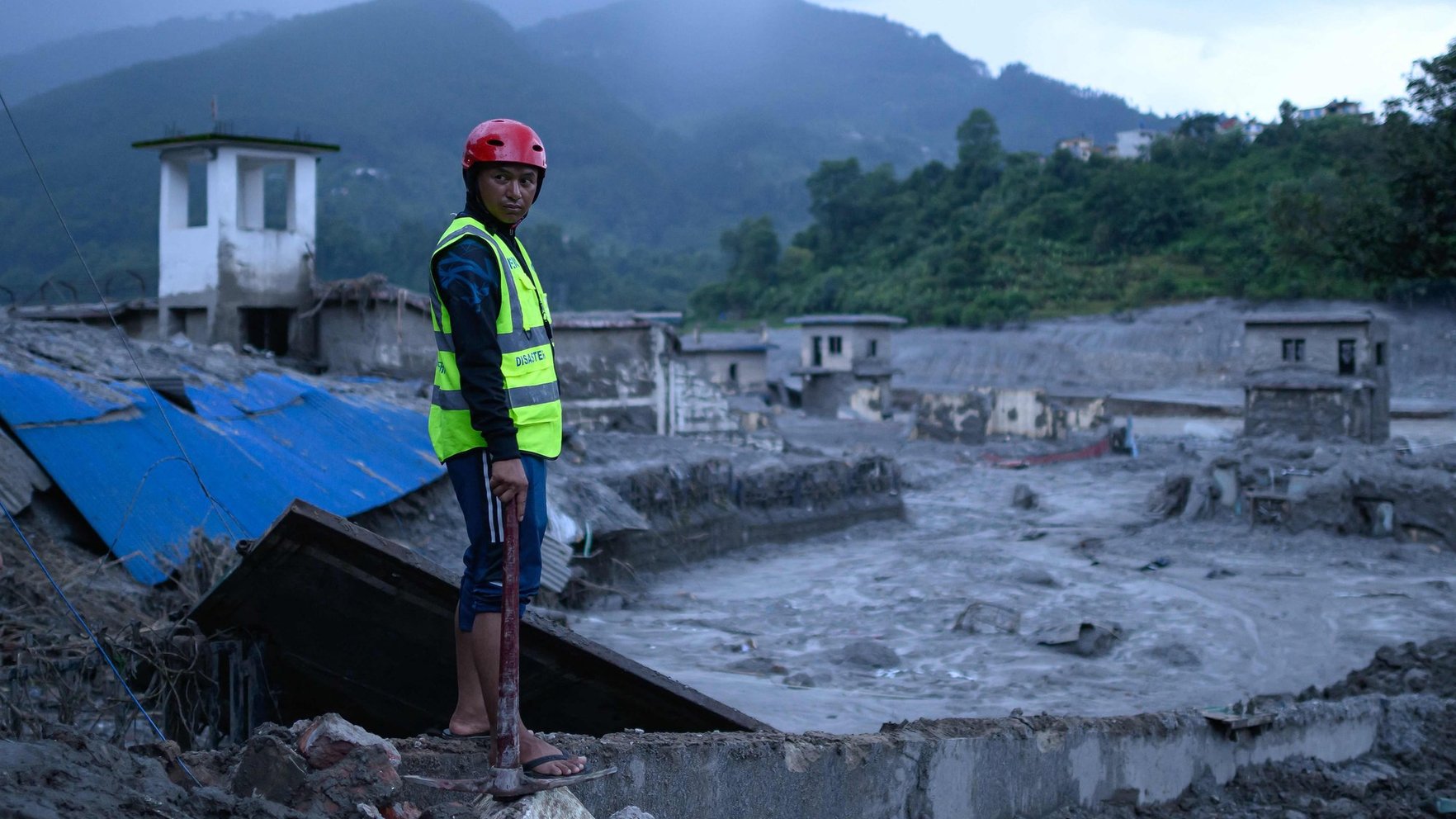
The World Weather Attribution research group has published findings on the August 26 disaster near the Nepal-China border, when roughly 110 million cubic meters of rock and ice broke away from Langtang Lirung mountain. The mass fell from a height of about 1,400 meters and slammed into the valley below with enormous force, triggering a flood surge that moved faster than 177 kilometers per hour, destroying homes, roads and bridges. More than 1,300 people died in the disaster, while over 5,000 remain missing.
An extremely rare event
Researchers estimate that a rockslide of this scale at this specific location would typically occur only once every 1,000 to 10,000 years. Still, conditions in the days before the collapse were unusual: temperatures in the region have risen by about two degrees Celsius since pre-industrial times, while July and August warming reached roughly 1.5 degrees. This summer was the warmest on record in the area, and in the days before the disaster temperatures in places exceeded the 30-year average by as much as five degrees.
Long-term shifts across the Himalayas
Scientists note that since the 1980s, the elevation above which temperatures stay below freezing has risen across the Himalayas by roughly 100 meters per decade. This has driven glacier retreat and permafrost thaw, both of which can destabilize mountain slopes. A powerful 2015 earthquake may also have played a role, though researchers were unable to determine its exact contribution.
Study co-author Ben Clarke said the fingerprints of climate change are clearly visible in long-term processes around the glacier, affecting many of the possible drivers of the collapse. Nepal's foreign minister has called on the largest greenhouse gas emitters, including China and India, to share responsibility for the consequences. A group of Latvian tourists was near the site at the time; three Latvian nationals in the area were unharmed.