Sturgeon washed ashore at Miķeļbāka – restoration program shows results, public urged to report
A sturgeon, considered extinct in the Baltic Sea, washed ashore near Miķeļbāka campsite this week. Experts say it's not unique, as Latvia has been running a sturgeon restoration program since 2013, and urge the public to report similar findings.
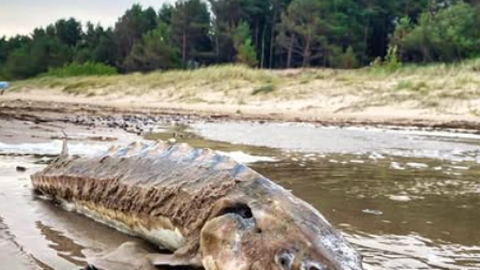
Rare sturgeon washed ashore at Miķeļbāka
A sturgeon, considered extinct in the Baltic Sea region, washed ashore this week near the Miķeļbāka campsite. While social media speculated about the find, Ivars Putnis, head of the Fish Resources Research Department at the BIOR Institute, explained that such occurrences are not uncommon.
Since 2013, when Latvia joined the sturgeon population restoration program in the Baltic Sea, sturgeon catches have been recorded regularly. This year alone, 13 sturgeon catches have been registered in the coastal commercial fishing log, most of them off the coast of Ventspils municipality.
Restoration efforts
Sturgeon were historically a significant species in the region but eventually disappeared. The last catch of a wild sturgeon was recorded in the 1990s near the Estonian islands. Germany began restoration in the early 2000s, followed by other countries, including Latvia in 2013. The program involves raising sturgeon genetically close to the historical population in hatcheries and releasing juveniles into river systems and estuaries.
Putnis emphasized that the Miķeļbāka sturgeon is not unique, and such catches are expected to become more frequent. He urged the public to report any similar finds to BIOR, especially if the fish has a tag near the dorsal fin with a country code and phone number.
Value of reports
Reporting helps scientists understand the sturgeon's distribution, growth, and the program's success. In recent years, approximately 3,000 sturgeon have been released in Latvian waters, though not annually. Sturgeon are slow-growing; they reach sexual maturity at 7–8 years, but sometimes only at 20–30 years. So far, there is no evidence that any released sturgeon have spawned.
"We look to the future with hope, as the goal is to achieve a self-sustaining population. However, climate change, environmental shifts, and obstacles to migration in rivers pose risks," Putnis said. He added that sturgeon are also popular in aquaculture, and some escape from ponds. Based on a photograph, it is impossible to determine whether the Miķeļbāka sturgeon came from the restoration program or aquaculture.
The institute maintains a database of rare species. Other rare fish, such as swordfish from the Atlantic Ocean, have also been found stranded near Liepāja.