A fifth of Latvia's economy still operates in the shadows
A new SSE Riga study shows Latvia's shadow economy stood at 21.8% of GDP last year, with envelope wages growing sharply while, unlike Lithuania, no real improvement is visible.
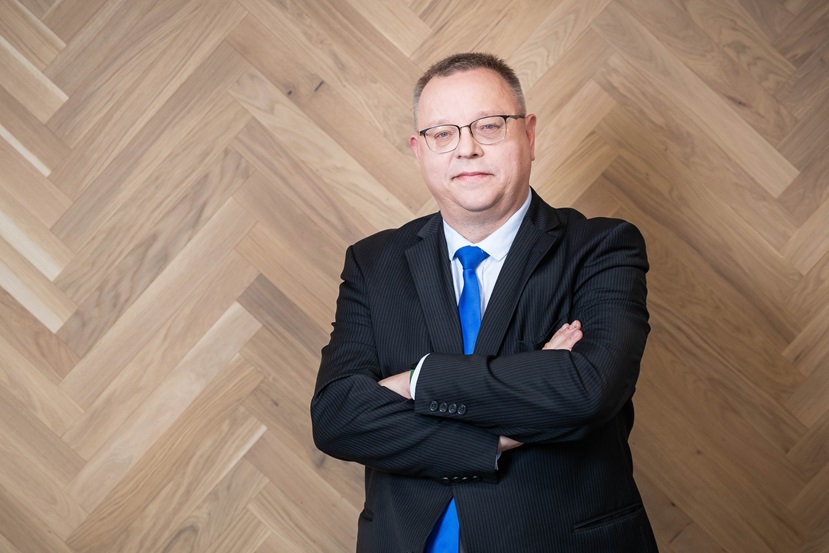
A new shadow economy survey by the Stockholm School of Economics in Riga (SSE Riga) shows that Latvia's informal economy reached 21.8% of GDP last year. By comparison, Lithuania stood at 23.6% and Estonia at 20.8%. More telling than the single-year figure is the trend: while Lithuania's shadow economy has been shrinking in recent years and Estonia's has been growing, Latvia's has shown no meaningful change despite years of enforcement efforts.
Envelope wages keep rising
Of particular concern is the spread of so-called envelope wages, which make up nearly half of Latvia's entire shadow economy. Their share of total wage payments rose from 14.1% in 2019 to 17.8% last year, while the number of informally employed workers has nearly doubled since 2018. Although a larger take-home sum may seem attractive in the short term, it ultimately means weaker social guarantees, a smaller future pension, less protection in disputes with employers, and greater difficulty obtaining bank loans, since lenders typically assess only regular, provable income.
Business environment plays a role
The diverging trends across the Baltic states point to the importance of economic growth and business confidence in government support. In Lithuania, where the economy has grown faster and entrepreneurs rate state support more favorably, the share of envelope wages has declined since 2022. In Estonia, where business satisfaction with tax policy has fallen, the opposite trend has emerged. In Latvia, the shadow economy is most prevalent in construction (29.5%), trade (24.5%) and services (22.3%), meaning uniform solutions across sectors are unlikely to be effective.
Examples from other countries suggest alternative approaches. In Finland, households can claim a tax deduction for certain legally purchased home repair and maintenance services, encouraging customers to request receipts and choose legal providers. In Estonia, small business owners can use a simplified business account where tax is calculated automatically on incoming payments. The conclusion is that reducing the shadow economy requires combining enforcement with incentives, making legal activity economically worthwhile for both businesses and consumers.
/nginx/o/2026/08/25/17876184t1hec7d.jpg)

