Errors found in illustrations of first-graders' booklet – children shown with six fingers, three legs
A booklet for first-graders prepared by Latvia's Children's Rights Protection Centre contains illustration errors, including extra fingers and limbs, raising suspicions of AI-generated images. The centre will not recall the booklet since the flaws were discovered only after distribution to schools.
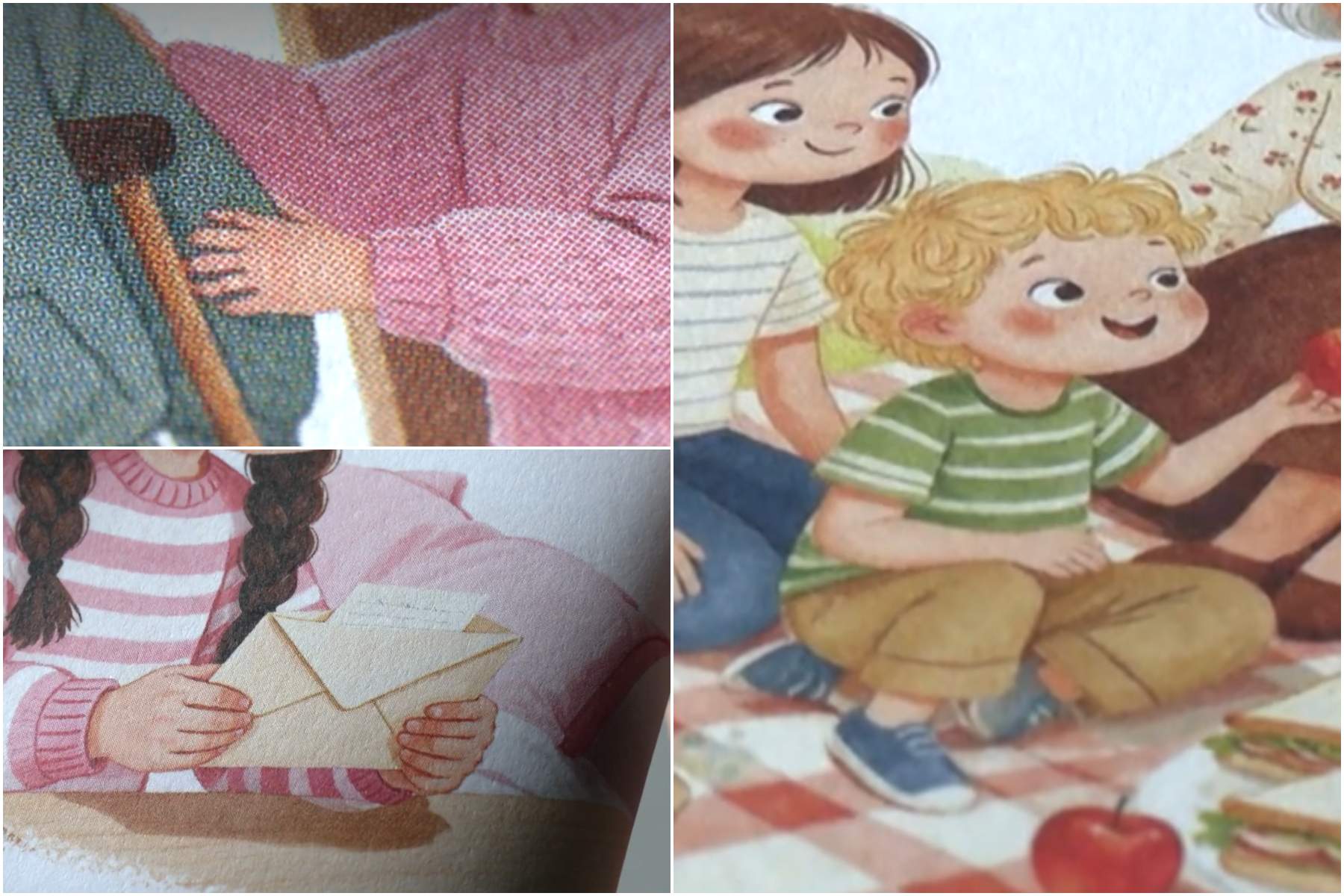
A booklet for first-graders and their parents, prepared by the Centre for the Protection of Children's Rights, was sent to Latvian schools in late August but has drawn attention for errors in its illustrations rather than its content. TV3's programme “Bez Tabu” noted that several drawings show children with six fingers, while one depicted boy has three legs and another has three arms. Readers of the booklet suspect the images were created using artificial intelligence.
Sandra, the mother of a first-grade student, expressed outrage over the images, questioning how such material could have been approved at all and how much it cost.
Centre explains the situation
The Centre for the Protection of Children's Rights acknowledged that it received the final version of the booklet only in late August, by which time the material had already been sent to schools. As a result, the centre decided not to recall the booklet but to seek a solution together with the contractor. Centre director Natālija Aprāne said the booklet had been tested before publication, but no one noticed the illustration errors at the time. She stressed that all textual information is correct and that the mistakes are limited to the illustrations, which can only be spotted if one specifically looks for them.
The booklet was printed in a run of 20,000 copies. Development and delivery of this booklet and another one together cost 29,000 euros.
Criticism from industry representatives
Alīse Nīgale, head of the publishing house “Liels un mazs”, was far more critical, describing the result as blatant unprofessionalism. Artificial intelligence researcher Ēvalds Urtāns said the problem lies not in the technology itself but in how it was used, adding that such errors could easily have been avoided had the images been properly checked before publication.
/nginx/o/2026/03/30/17535721t1h129e.jpg)