Poland's Constitutional Tribunal Fight: Commentator Weighs Impact on Latvia
Leadership of Poland's Constitutional Tribunal was changed on 30 October while the president was abroad. Latvian politician Bens Latkovskis argues in a commentary that the country's divide matters for Europe and Latvia.
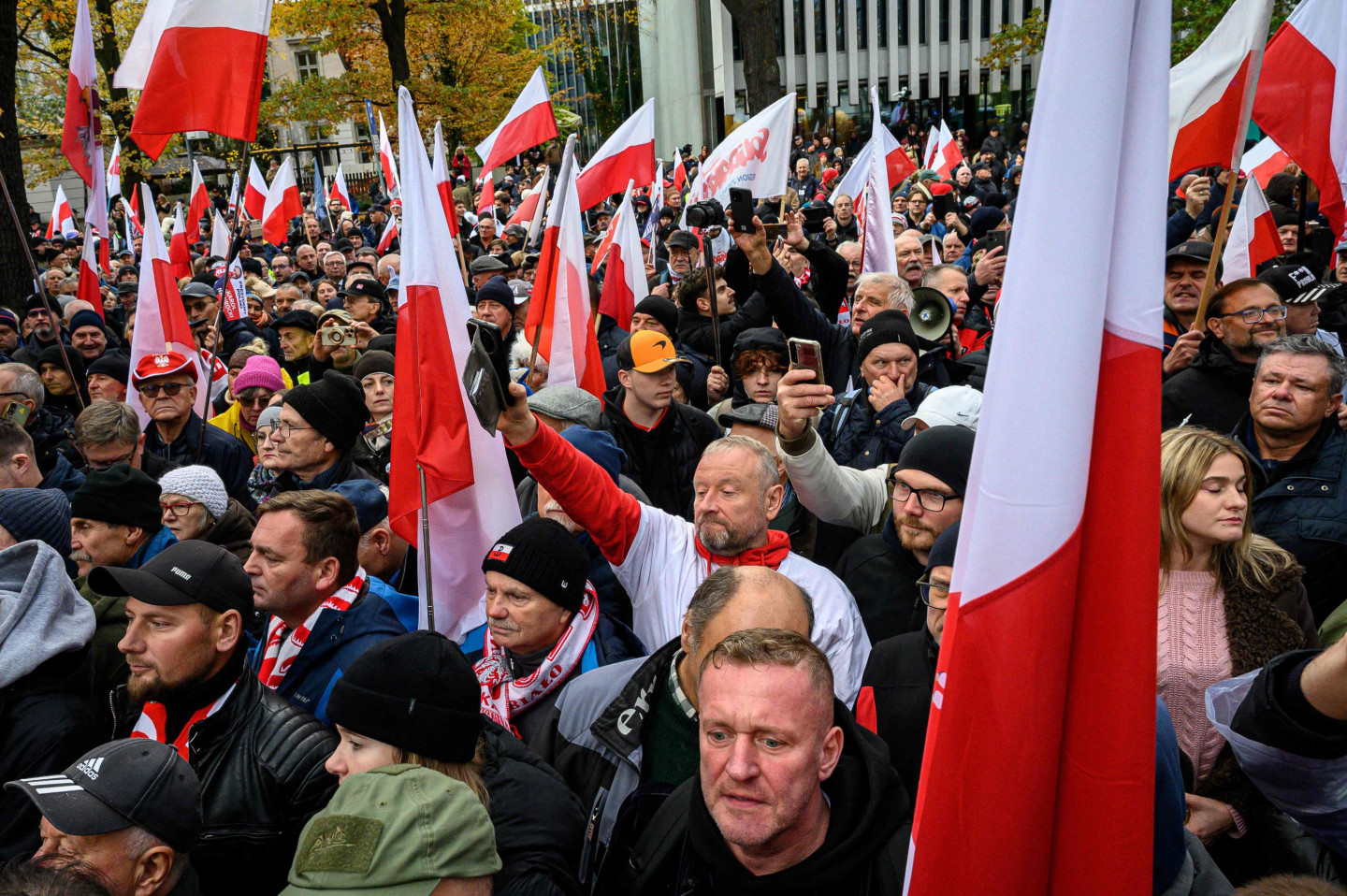
The leadership of Poland's Constitutional Tribunal, the country's top constitutional court, changed on Friday, 30 October. Tribunal judge Anna Korwin-Piotrowska removed the sitting president of the court, Bogdan Święczkowski, and took over its management. The episode reflects the confrontation between Prime Minister Donald Tusk's liberal bloc and President Karol Nawrocki's conservative camp, and it may affect the parliamentary elections planned for next year. This is the assessment of Bens Latkovskis in a commentary for the Latvian portal NRA.
What happened
According to the author, the leadership change was carried out with the help of security forces and with the involvement of the prime minister while Nawrocki was on a visit to Senegal. Korwin-Piotrowska relied on a provision stating that if the court's president and deputy cannot perform their duties, leadership passes to the judge with the longest service. She has almost 30 years of professional experience. Some Polish politicians called the event a coup, but the top officials remain in their posts.
Background to the dispute
The tribunal has 15 judges, elected by the Sejm, Poland's parliament, for nine years. The dispute began in 2015, when the outgoing Sejm elected five judges, two of whose terms began only after the new parliament convened. After the elections, the Law and Justice party (PiS) rejected all five and elected its own candidates. The tribunal then held that only two had been elected unlawfully, but that ruling was not implemented.
In March this year, the current Sejm majority elected six new judges, but Nawrocki accepted the oath from only two. Five of those elected swore their oath before the Sejm, and Święczkowski refused to let them work. The prosecutor general has opened criminal proceedings against him and his deputy Bartłomiej Sochański.
Political consequences
Nawrocki frequently uses his veto, and Tusk's government lacks the 3/5 majority in the Sejm needed to override it, so the author says lawmaking is paralysed. He believes PiS and the president aim to regain power in next year's elections.
Latkovskis notes that euroscepticism and the idea of reducing support for Ukraine are common in the conservative bloc, and considers its victory unfavourable for Latvia.