Poland plans to build a half-million strong army within 15 years, with modern technology
Poland's government has approved an ambitious program to create a 500,000-strong army by 2039, combining quantity with quality and introducing drones and artificial intelligence.
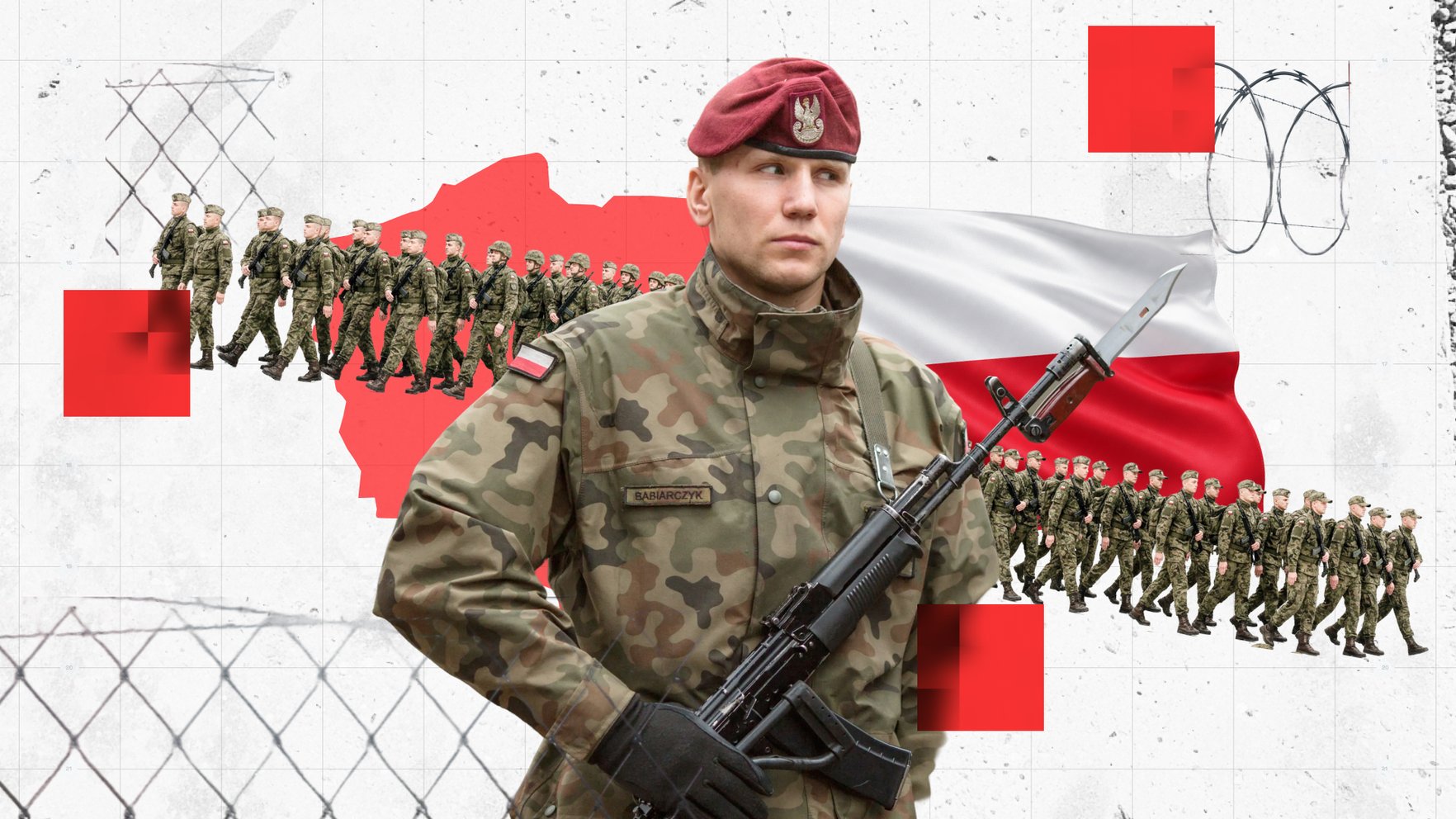
Poland's Armed Forces Development Program for 2025–2039, discussed in Polish media, sets a goal to build an army of 500,000 troops over 15 years. The plan entails not only a significant increase in personnel but also a technological revolution, with mass introduction of drones and artificial intelligence systems.
According to Gazeta Wyborcza, the document redefines the approach to national defense, abandoning the dilemma of quality versus quantity. Instead, it introduces the concept of "quality multiplied by quantity," meaning simultaneous growth in both troop numbers and their training.
The plan rests on three interconnected pillars: a strong society, strong alliances, and a strong army. Combat capabilities are to be developed for multi-domain operations covering land, sea, air, space, cyberspace, and information space. Poland's General Staff also plans to conduct cognitive operations to protect society from manipulation and influence enemy decision-making.
Local defense industry plays a key role – priority is given to Polish-made equipment and ammunition to ensure independence from foreign suppliers and create an economic boost for the country.
Under the plan, 300,000 troops would be in active service, and 200,000 in a high-readiness reserve – a new concept. Currently, the Polish army has over 217,000 troops, including 162,000 professional soldiers, with the rest being territorial defense forces and volunteers. Poland has the third-largest army among NATO countries.
Service in the high-readiness reserve will be voluntary, offering compensation for training and access to courses. Reservists will be required to train at least eight days per year. The ministry also plans to establish reserve officer candidate schools.
To boost public interest, a voluntary training program called "wGotowości" ("Readiness") has been launched, focusing on general safety, first aid, survival, and cyber hygiene. Over 16,000 volunteers participated in its pilot phase.
Military analyst Mārtiņš Vērdiņš believes the goal is achievable given Poland's population of 37 million. However, he notes that maintaining a large mobilization reserve in the long term would require widespread compulsory military service, as the current volunteer base is relatively small. For now, until volunteer reserves are exhausted, Poland can increase numbers without losing quality.