Polish experts debate how to split EU funds for farming after 2028
Experts at the European Commission's office in Warsaw discussed the reform of the EU's Common Agricultural Policy for 2028–2034. Poland's agriculture ministry considers the proposed amount too low and wants an extra €4 billion.
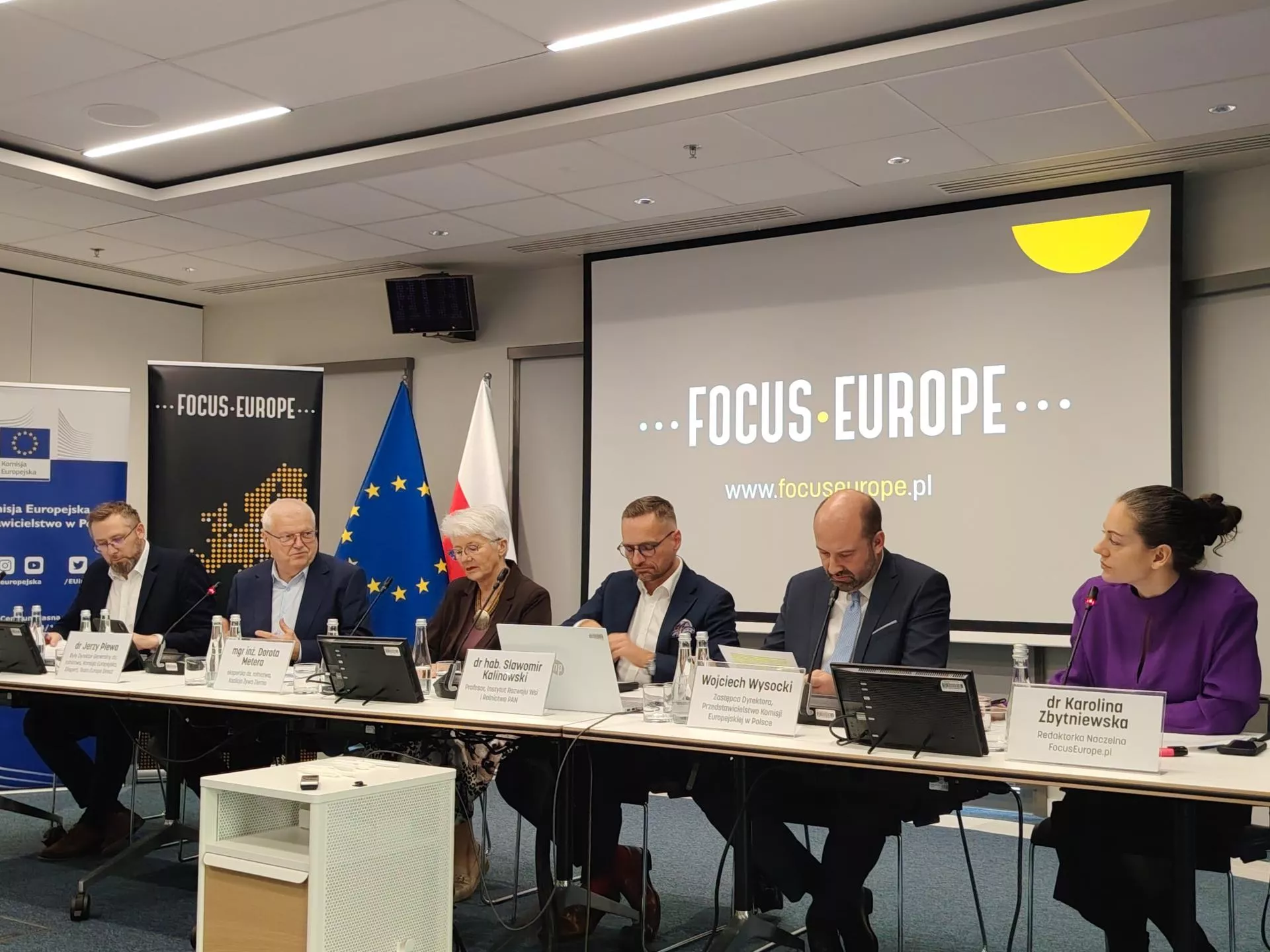
A discussion on the future of the EU's Common Agricultural Policy (CAP) was held at the European Commission's representation in Poland. The Commission is negotiating the next multiannual budget for 2028–2034, and talks are still ongoing. It proposes to guarantee roughly €300 billion for farmers' income support and crisis response, while giving member states more freedom to decide how funds are spent.
More flexibility, more uncertainty
Dr Jerzy Plewa, former director of the Commission's agriculture directorate (DG AGRI) and now an expert with Team Europe Direct, said the policy instruments themselves are not changing, but the way they are managed is. Farm support will be integrated into national and regional partnership programmes, and the first and second pillars will be merged. This gives more flexibility but also uncertainty over how money will be divided. According to him, Poland's proposed allocation is the largest: €123.3 billion in partnership funds, of which about €9 billion could go to agriculture. Added to €24.6 billion in direct payments, this makes €33.5 billion, compared with €21.6 billion plus €8.8 billion now. Plewa said the amounts are broadly similar, and that farmers are right to demand inflation be taken into account.
No agreement on the EU budget has been reached. The Irish presidency recently proposed cutting crisis-response funds by around 8% without touching direct payments, but the proposal has not been accepted.
Poland's position
Wojciech Wysocki, deputy director of the Commission's office in Poland, believes Polish farmers will not lose from merging the funds, and that the merger will bring savings. Dr Bogdan Pomianek, a senior adviser at Poland's Ministry of Agriculture, acknowledged that the sum is comparable to the previous one but said the money has lost value, so the ministry is seeking €37 billion, or €4 billion more. It should be used, for example, for generational renewal and new technologies. He said the extra funds are being discussed at government level, since other ministries also want bigger budgets.
Plewa argued that Poland previously shifted money from rural development to direct payments, so current calls for rural funding are not very credible. Pomianek replied that this was a political decision any country could have made.