Polish breeders: new genomic techniques alone will not secure competitiveness
Dr Sławomir Sowa, director of Poland's Plant Breeding and Acclimatization Institute, says new genomic techniques (NGT) can speed up variety development, but Polish firms lack investment and patent protection.
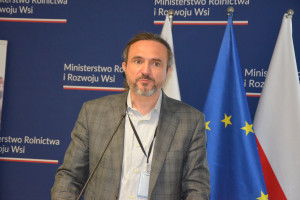
Dr Sławomir Sowa, director of the Plant Breeding and Acclimatization Institute (IHAR-PIB), a Polish state research body, spoke about new genomic techniques (NGT) at the 7th Food Producers Forum in Poland. In his view, NGT can speed up plant breeding and help create varieties more resistant to drought and other environmental stress. However, simply allowing the technology will not make Polish breeders competitive with foreign corporations.
What NGT offers
Sowa explained that breeding has so far relied on conventional methods, including mutations induced by radiation or chemicals. NGT, especially targeted mutagenesis, known as genetic scissors, allows specific changes at chosen points in the genome. The techniques can be used in breeding cereals, oilseeds, vegetables, root crops and orchard plants. As examples he cited soybean varieties with greater drought tolerance or altered fatty acid composition. Soybean with higher oleic acid content is already sold on the US market as non-GMO. He also noted heavy investment in plant biotechnology in China, including work on maize and rice.
Two plant categories in the EU
The approach proposed in the European Union divides NGT plants into two categories. The first covers plants whose genetic changes are equivalent to conventional ones: they do not go beyond variation found in nature or obtainable with traditional methods. Such plants would be much easier to place on the market. The second category faces requirements similar to those for GMOs. Sowa said bringing a GMO to market takes tens of millions of dollars and about 10 years, while NGT commercialisation costs are lower.
Obstacles for Polish companies
Sowa warned about access to patented solutions, licence costs and intellectual property protection, since many patents belong to foreign firms. He said Polish companies lack know-how in implementing NGT and protecting their own achievements. The gap in research funding is large: one Polish company spends about €3 million a year, while a German corporation has a budget of about €340 million.
In Poland's winter wheat market, foreign varieties account for about 62%, and Polish ones for under 38%. For rye, Polish varieties hold about 63%, although around 25 years ago almost all material was domestic. Sowa links this to the low share of certified seed in cereals: 27% in Poland, over 50% in Germany and 90% in Scandinavian countries. He backs the idea of a licensing platform for NGT traits, but acknowledged that not all companies will want to share their solutions without economic benefit.