Poland-Ukraine relations sour as sympathy gives way to resentment
Polling shows a majority of Poles now oppose hosting Ukrainian refugees, as historical disputes and Russian disinformation strain once-close ties between Warsaw and Kyiv. Attacks on Ukrainians in Polish cities have also been reported.
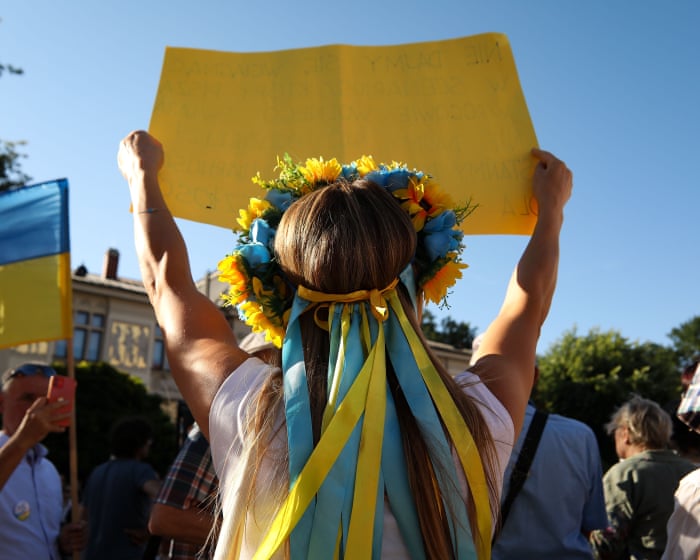
At the start of Russia's invasion, Poland emerged as one of Ukraine's staunchest allies, with ordinary citizens opening their homes to fleeing refugees and even the then-ruling populist party joining the wave of solidarity. Given a history marred by mutual accusations over wartime atrocities and postwar population transfers, the warmth between the two nations seemed remarkable.
That goodwill, however, has faded. According to a poll released last month by CBOS, Poland's leading polling institute, 52% of Poles now oppose their country accepting Ukrainian refugees. Fatigue with supporting Kyiv is also growing, with some on the right arguing that arms transfers have weakened Poland's own defensive capacity against a possible Russian attack.
Historical disputes and attacks
Tensions escalated after Ukrainian President Volodymyr Zelenskyy named a military unit after the Ukrainian Insurgent Army (UPA), a group responsible for killing around 100,000 Poles in 1943. In response, Polish President Karol Nawrocki revoked Zelenskyy's Order of the White Eagle, the country's highest honour for foreign nationals. Neither side has backed down, effectively freezing diplomatic relations.
Russian propaganda circulating on Polish social media has capitalised on the rift, spreading disinformation claiming Ukrainians exploit welfare benefits at locals' expense. The resulting tension has increasingly turned violent — in late July, a young Ukrainian couple was attacked outside a grocery store in Wrocław, with attackers reportedly shouting for them to return to fight in the war.
A failure of mutual understanding
Journalist Mateusz Mazzini argues that a core reason for the breakdown is that neither country made enough effort to understand the other beyond the context of war. Poland failed to grasp that Ukrainians are not merely war victims but people with agency, who have since started businesses and become competitors to locals. Meanwhile, Ukraine has evolved from a passive recipient of Western aid into an exporter of military technology, no longer needing Poland to act as its advocate.