Poland-Ukraine "Order Scandal": Historical Context and Domestic Politics
Polish President Karol Nawrocki revoked the White Eagle Order from Ukrainian President Volodymyr Zelensky, triggering the largest diplomatic row since the war began. Experts say the scandal partly stems from Polish domestic politics, while historians point to the complex legacy of WWII nationalist violence.
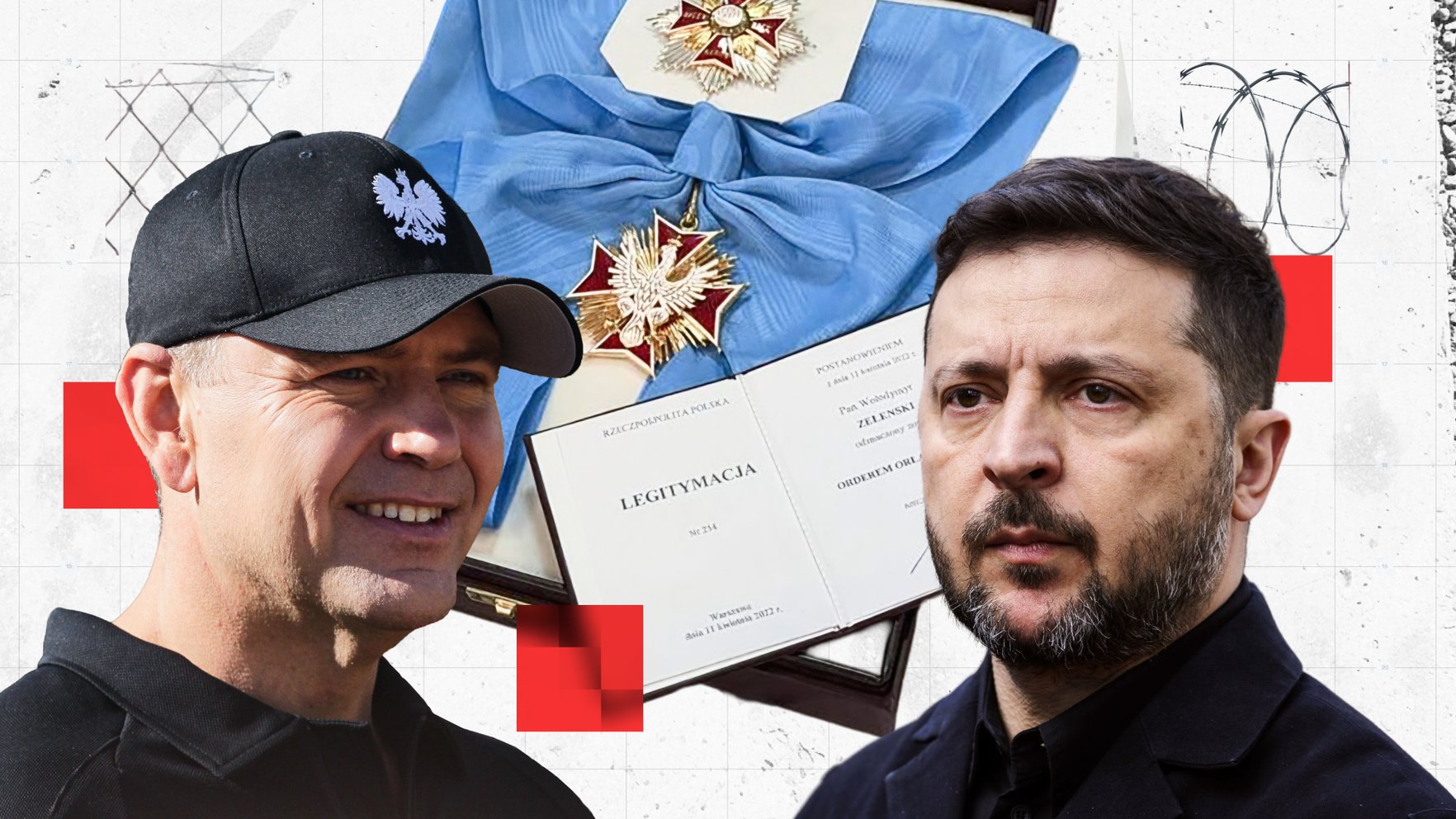
In June, the biggest diplomatic incident between Poland and Ukraine since Russia's full-scale invasion erupted. Polish President Karol Nawrocki revoked the White Eagle Order, Poland's highest state honor, from Ukrainian President Volodymyr Zelensky. The official reason was Ukraine's decision to rename one of its army units after the Ukrainian Insurgent Army (UPA), which fought for independence during WWII but is also accused of violence against Polish and Jewish civilians. In solidarity with Zelensky, several prominent Ukrainian politicians renounced their own Polish medals.
Historian Valdis Kuzmins explains that orders differ from medals; an order is an organization whose members have privileges and responsibilities, and the status can be revoked. The White Eagle Order symbolizes Poland's continuity from the ancient Polish kingdom. The UPA was part of a spiral of nationalist violence, and attempts to simplistically determine which side was "good" are nearly impossible, as the region was multi-ethnic and each side committed atrocities.
Foreign policy researcher Armands Astukevičs told Delfi that the scandal is largely a domestic political maneuver. President Nawrocki, backed by the opposition party Law and Justice, aimed to undermine the government of Prime Minister Donald Tusk, who pursues a more Ukraine-friendly policy. The revocation occurred just before a Ukraine reconstruction conference organized by Tusk, which Zelensky ended up not attending.
Astukevičs believes that in the long run, the scandal won't fundamentally alter bilateral relations, though Russian propagandists are already exploiting it. Polish public support for Ukraine remains strong, but war-related economic strain and refugee issues could fuel more radical voices. Whether tensions escalate will depend on Tusk's government's ability to manage these challenges.