Progressive Democrats hold shadow hearing on Medicare for All
The Congressional Progressive Caucus held a shadow hearing to push for universal healthcare, citing a broken system with high costs and millions uninsured.
Shadow hearing on healthcare reform
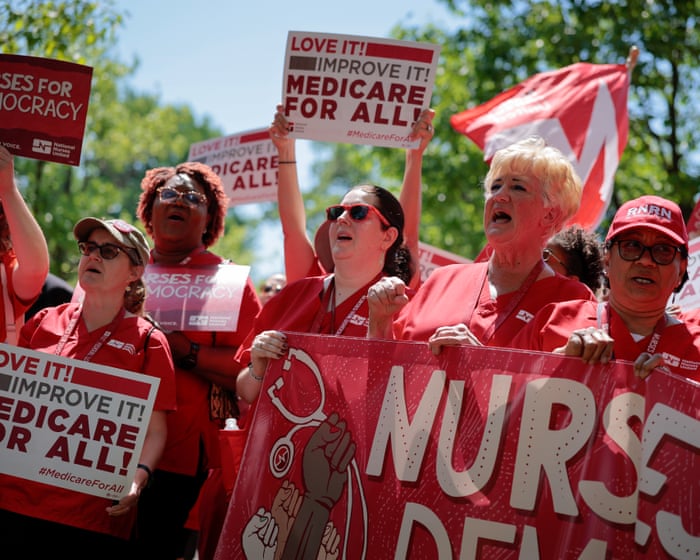
The Congressional Progressive Caucus (CPC) held a shadow hearing on Wednesday to advocate for Medicare for All, led by Representatives Pramila Jayapal and Debbie Dingell.
The hearing comes as more than half of House Democrats have co-sponsored Medicare for All legislation. Senator Andy Kim introduced a bill on Tuesday that would enroll all children in Medicare up to age 26, while Republicans passed major healthcare cuts in the One Big Beautiful Bill Act, including nearly $1 trillion in cuts to Medicaid and allowing Affordable Care Act subsidies to expire.
Calls for reform
Debbie Dingell referenced her father-in-law, who drafted the universal healthcare legislation that laid the foundation for Medicare, and her late husband, who frequently introduced Medicare for All bills. She noted that the US spends twice as much per person on healthcare as countries with similar systems, yet 28 million Americans remain uninsured.
Dr. Diljeet K. Singh of Physicians for a National Health Plan testified that at least 35 cents of every healthcare dollar is wasted on insurance administration and corporate profit. Jamie Brown, president of National Nurses United, said the only way to transform the system is to remove the profit motive entirely.
Conflicting views and public support
The center-left Searchlight Institute urged Democrats to refrain from supporting Medicare for All, citing a June poll where 70% preferred keeping their current insurance – though 45% already receive insurance through Medicare or Medicaid. Another poll from November found 52% favored a Democratic candidate supporting the policy over a Republican.
A human right
Representative Greg Casar called Medicare for All the CPC's top priority. Representative Adelita Grijalva highlighted the system's symptoms: highest out-of-pocket costs among high-income nations, most medical bankruptcies, and worse health outcomes. Melanie Stansbury pointed out that $37.5 billion spent on the Iran war shows funding universal healthcare is possible. Jayapal concluded that the current system has collapsed under for-profit insurers, and Americans want a transformative system where healthcare is a human right.