Columnist: Russia's war forces reassessment of Albanian dictator's bunker legacy
Ukrainian journalist Mykhailo Dubinianskyi argues that Russia's invasion of Ukraine is prompting many to reconsider Enver Hoxha's total militarization policy in Albania, once dismissed as paranoid absurdity.
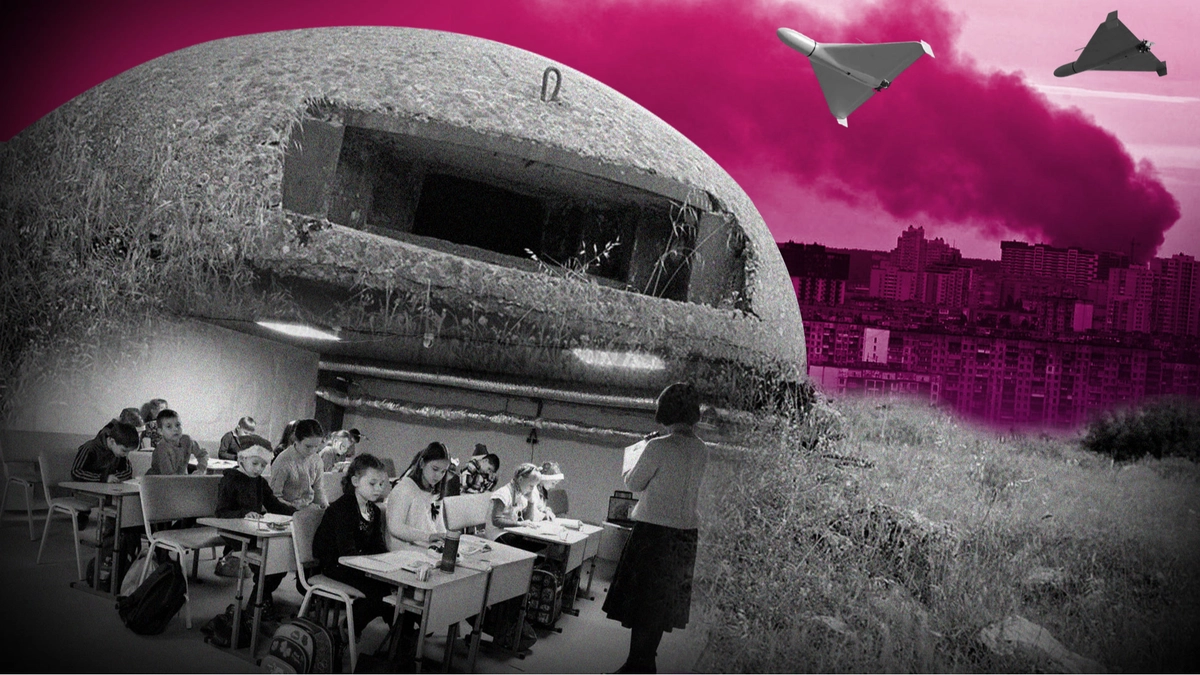
Ukrainian outlet Pravda columnist Mykhailo Dubinianskyi has published an article comparing today's debate over militarizing Ukraine to the policies of Albanian communist dictator Enver Hoxha in the 20th century.
The article recalls Albania's history: independence from the Ottoman Empire was declared in November 1912, but the new state immediately faced territorial claims from Greece and Serbia. During World War I, armies from seven countries — Austria-Hungary, Italy, France, Greece, Serbia, Bulgaria and Montenegro — passed through Albanian territory. The secret 1915 Treaty of London even envisioned eliminating Albania's independence altogether. Sovereignty was restored in 1920, but in 1939 the country was occupied and annexed by fascist Italy; in 1943 the Italians were replaced by the Germans, until Hoxha's communist partisans finally achieved liberation.
Once in power, Hoxha promoted the slogan "every citizen is a soldier, the people are the army." Military training began in schools, and universal conscription applied to both men and women aged 18 to 56. More than 170,000 bunkers were built across the country, with military spending reaching up to 20% of GDP in some years. The capital was ringed by 50 concentric circles of defensive points. Mass bunker construction began after the Soviet invasion of Czechoslovakia, which Hoxha condemned as an act of aggression, having already broken ties with Moscow.
After the fall of communism, Hoxha was remembered as a paranoid tyrant who bankrupted his country with excessive military spending. But according to Dubinianskyi, after Russia's full-scale invasion of Ukraine in 2022, such an approach no longer seems absurd to many — Albania's experience is now being studied by proponents of total militarization in Ukraine, including Maria Berlinska and Dmytro Korchynskyi. The author warns that Russian terror is destroying the hope that emerged after the Cold War, making a return to the "fortress state" model increasingly plausible.