Rajevs: Putin's and Zelensky's demands make peace in Ukraine unreachable for now
Latvian parliament member and army reserve colonel Igors Rajevs says the latest demands from the leaders of Russia and Ukraine mean the peace talks to end the war in Ukraine should be written off for now. He argues no deal is possible on such terms.
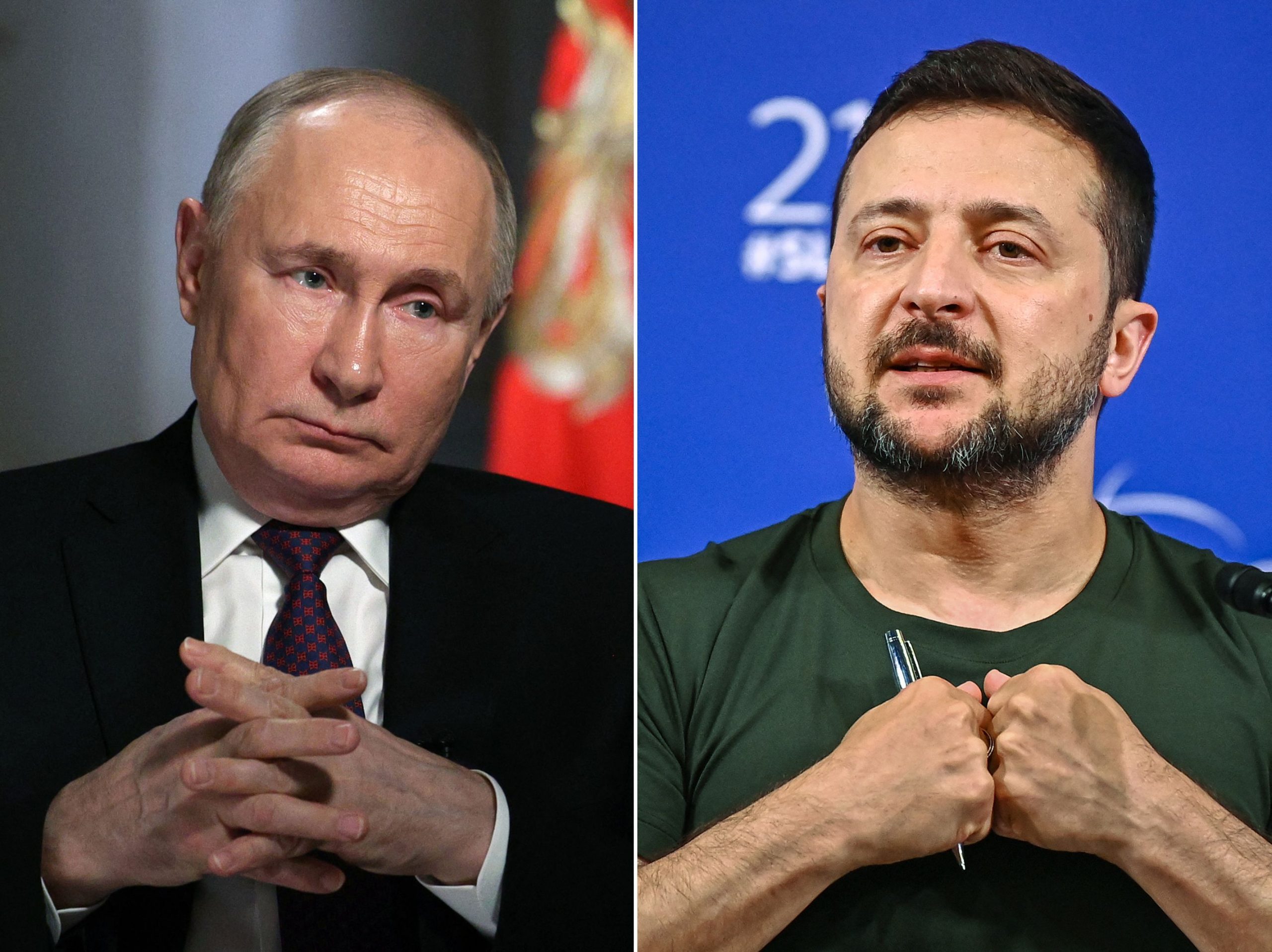
Peace talks aimed at ending the war in Ukraine got off to a poor start last week, as Russian President Vladimir Putin and Ukrainian President Volodymyr Zelensky issued statements that differ sharply and make an agreement harder to reach. That was the assessment of Igors Rajevs, a member of Latvia's Saeima (parliament) and a reserve colonel of the National Armed Forces (NBS), on the TV24 programme "On the War in Ukraine with Igors Rajevs". In his view, the current demands mean the talks should be crossed out for now.
Ukraine's demands
Rajevs first addressed Zelensky's statement on Ukraine's future army. The Ukrainian president wants the country to keep armed forces of 800,000 troops after the war. Ukraine also does not intend to accept neutral status, wants to join NATO and rejects any limits on its military capability.
Rajevs noted that setting out such demands before negotiations may be an attempt to strengthen a bargaining position. Still, he believes talks make little sense if one side sets conditions that are entirely unacceptable to the other. He also raised a practical question: who would be able to fund and sustain an army that large, since Ukraine itself would most likely not cope with the burden.
Russia's demands
Putin, for his part, has again demanded that NATO, the North Atlantic Treaty Organization, return to its 1997 military deployment positions. Rajevs recalled that Moscow made a similar demand in late 2021, before the full-scale invasion of Ukraine, calling on alliance forces to leave territories where they were deployed after 1997.
That would mean reviewing NATO's presence in countries that joined the alliance after 1997, including Poland and the Baltic states. Rajevs stressed that NATO will not accept such an ultimatum, so an agreement on these terms is not possible.
Other signals
Rajevs said the phone calls between the Finnish president and the Norwegian prime minister and Putin have so far produced no visible progress. He also cited Russian Foreign Minister Sergey Lavrov's statement that the war will continue regardless of how the peace talks go, with a tendency toward escalation. Rajevs considers this statement the most important signal of what to expect in the near term.