Border Guard Chief: Firearms Would Make It Easier to Catch Saboteurs at Belarus Border
Guntis Pujāts, head of Latvia's State Border Guard, says expanded firearm rights would help stop saboteurs and also protect the guards themselves. A Saeima committee has already backed the legislative amendments.
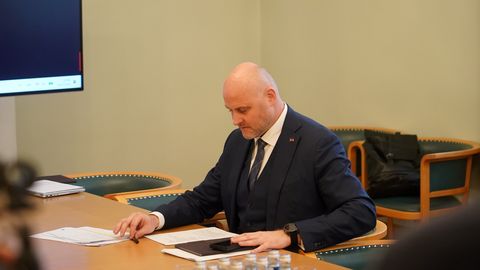
Guntis Pujāts, head of Latvia's State Border Guard, has backed legislative amendments that widen border guards' rights to use firearms to counter threats to national security. He spoke on the TV24 programme “Uz līnijas”. The amendments, drafted by the Interior Ministry and other institutions, have been supported by the Saeima's Defence, Internal Affairs and Corruption Prevention Committee. They concern Latvia's border with Belarus, where the border guard has recorded sabotage incidents.
Why a firearm is needed
Pujāts says guards often see violators several hundred metres away but cannot physically catch them in time. With a firearm, he says, that would be possible. According to him, intruders arrive for only a couple of minutes, while lookouts watch, and when guards approach, they all run back to Belarus.
He said there have been 61 cases in total in which saboteurs entered from the neighbouring country to hinder and endanger Latvia's border protection. In at least 35 of them, infrastructure, distribution cabinets and cameras were damaged, and in some other cases sensors were stolen.
What the amendments provide
A border guard will be allowed to use a firearm without prior warning if giving one is not possible in the situation. While on duty, guards will have the right to use physical force, special combat techniques, special equipment and service dogs to repel an attack on a site guarded by the border guard or on border infrastructure.
If criminal proceedings over a possible offence are opened against a guard after force or weapons were used, the case will first be investigated by officials authorised by the State Border Guard itself, rather than immediately by another law enforcement body.
Protecting the guards
Pujāts stresses that the rules are also meant to protect the guards themselves. In his view, the amendments will give assurance that decisive action in defence of national interests will not be unjustly turned against them. He acknowledges that all circumstances in each case must still be established.