Romania shuts last nuclear reactor as Danube hits record low amid drought
Romania has been forced to shut down the final operating reactor at its only nuclear plant because the drought-stricken Danube fell to record lows, a rare move that will immediately affect power supplies in neighboring Moldova.
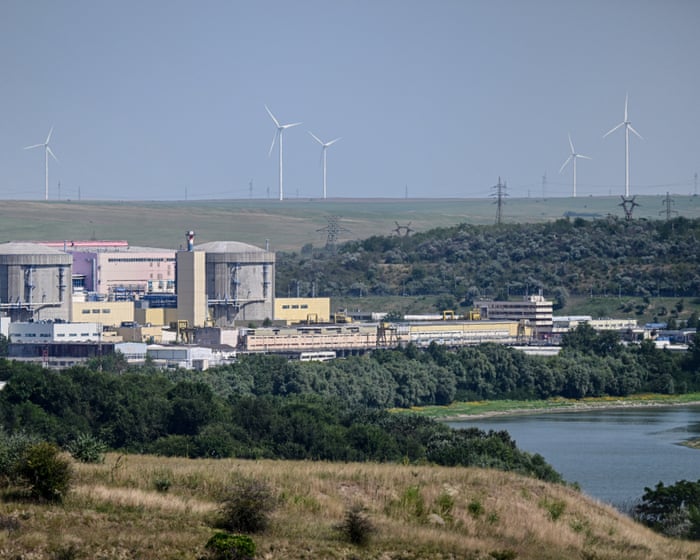
Romania announced it had to shut down the last working reactor at its sole nuclear power station in Cernavoda after a drought caused the Danube River to drop to unprecedented levels. This exceptional step has immediate consequences for electricity supply in neighboring Moldova, which depends heavily on Romanian imports.
The drought and record-low water levels have intensified fears of an energy crisis across Europe as the continent faces another summer heatwave. The Danube, which provides cooling water for the Cernavoda plant, had already forced Nuclearelectrica to halt one reactor in late July. On Thursday, the company said it needed to stop the second reactor due to the significant and ongoing drop in the river's level, with no restart expected within the next ten days.
The two 706-megawatt reactors at Cernavoda generate about 20% of Romania's electricity. In response, the government has declared a state of energy emergency for August and asked companies and households to reduce consumption during peak hours.
The closure poses immediate difficulties for Moldova, Romania's eastern neighbor, which has also experienced low river levels and relies on Romanian electricity to cover up to 60% of its energy deficit. Without Romanian imports, Moldova may need to buy more power from Ukraine if Kyiv can supply it, purchase costlier electricity from western countries, or implement rolling blackouts.
Moldovan energy expert Sergiu Tofilat told Radio Chisinau: "I think we should be ready for a worsening situation, including power outages, although it's hard to say for sure right now."
Romania's energy ministry said it had activated a 330-megawatt lignite-fired plant and was also counting on increased wind generation and hydropower, drawing on available reservoir water, to compensate for the shortfall. The ministry warned that as a last resort, large industrial users would face restrictions during evening hours. In early August, the government announced that carmakers Dacia and Ford would suspend production until August 19 to help ease the power deficit.
According to analysis from the European climate observatory Copernicus, nearly two-thirds of the Danube has seen flow rates drop to the lowest on record for July in 34 years. The drought has hit nuclear power providers across Europe. France, which generates around 70% of its electricity from nuclear power, recorded a more than 20% shortfall in atomic production capacity this week, a record deficit linked to drought, extreme heat, and a jellyfish invasion, based on data from Électricité de France (EDF). In total, 13 of EDF's 57 reactors were affected.
Hungary, which borders Romania, has avoided a full shutdown of its only nuclear plant at Paks, whose four reactors are also cooled by the Danube. With the river expected to fall further, Hungarian Prime Minister Péter Magyar said on Wednesday that the government had ordered the construction of a submerged weir to help control flows near the plant. Two 80-meter barges have also been positioned at Paks, which could be sunk to raise water levels. Paks, which normally provides about a third of Hungary's electricity, has been partially shut down since late last month.
The drought in Europe is being exacerbated by human-induced climate change, according to the World Weather Attribution group of scientists, who warn that the problem will worsen. The low level of the Danube, Europe's second-longest river, has also severely affected shipping along its 2,850-kilometer route stretching from western Germany to the Black Sea.