Draft proposal prepared to declare state of emergency in eastern border region
Latvia's Climate and Energy Ministry has submitted for approval a draft order to declare a state of emergency in the country's eastern border area, citing threats of Russian military escalation and increasing drone sightings near the border. The Cabinet of Ministers still needs to decide on the final proposal.
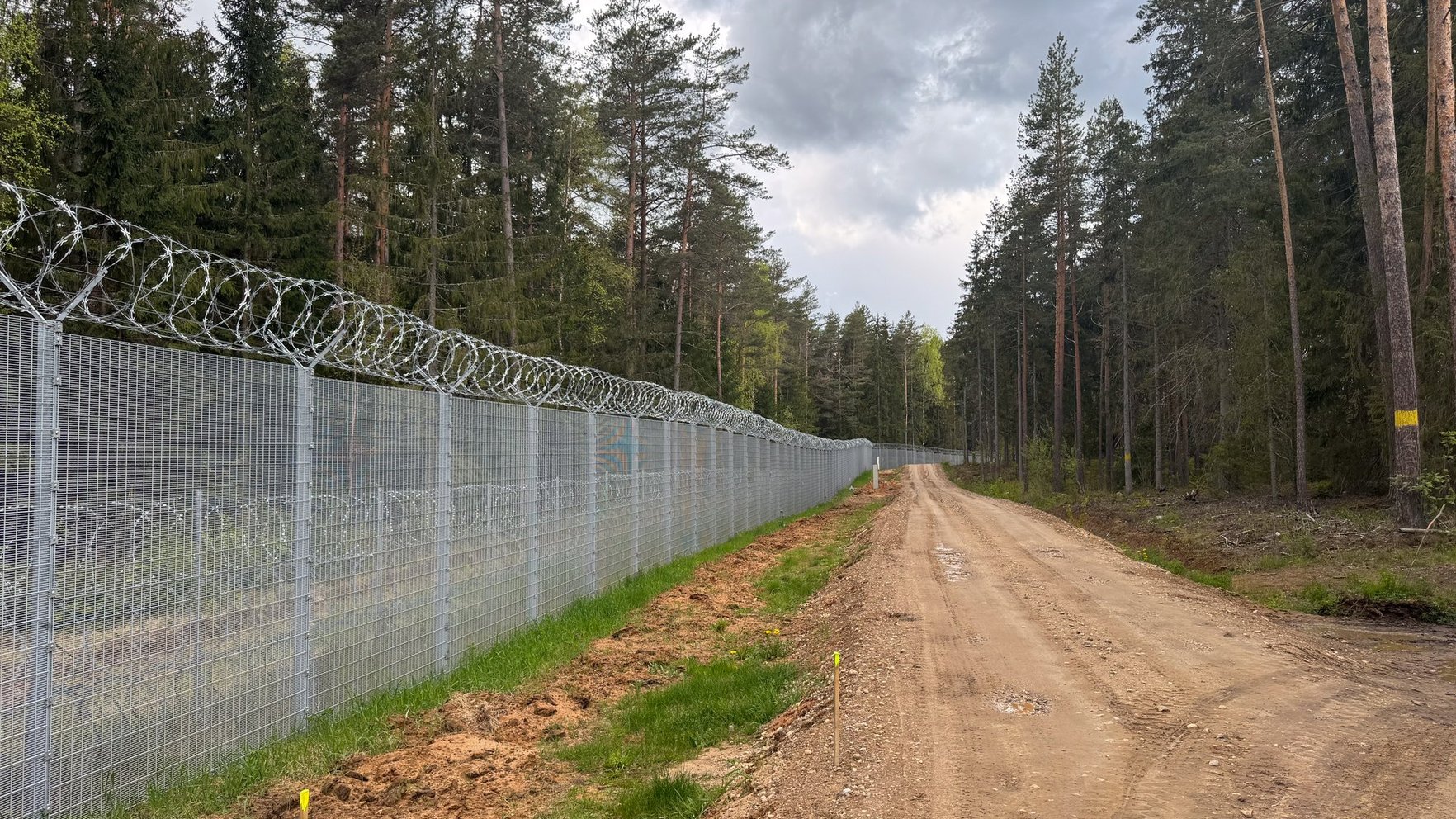
Latvia's Ministry of Climate and Energy has drafted and submitted for interagency approval a proposal to declare a state of emergency in the country's eastern border region. The government instructed the ministry to prepare such a document during its July 28 meeting, after reviewing a closed-session report on further action. Because that report was discussed behind closed doors, further details of its content have not been made public.
According to the explanatory note accompanying the draft order, the initiative stems from an increasing number of drones and other unidentified objects detected in Latvian airspace or near the state border, which could threaten public safety, health and the operation of critical infrastructure. The draft order itself also cites the threat of Russian military escalation as justification. The state of emergency is planned to remain in effect until December 1 of this year.
Affected territories
The special regime would apply to Alūksne, Balvi, Līvāni, Ludza, Preiļi, Augšdaugava and Krāslava municipalities, as well as the cities of Rēzekne and Daugavpils and their surrounding districts. It would cover the healthcare, energy supply and water management sectors to ensure the continuity of critical services.
Division of responsibility and measures
The Ministry of Defence would take a coordinating role in managing the state of emergency, while the Ministries of Health and of Climate and Energy would share responsibility in their respective sectors. In the water management and energy sectors, temporary exemptions from standard working-time and overtime rules are envisaged, allowing staff involved in critical functions to work under an intensified regime, alongside mechanisms for fair compensation and enhanced worker safety.
In healthcare, the plan foresees more flexible work organization at medical institutions and the Emergency Medical Service, along with the option to issue sick leave certificates remotely under certain safe conditions. Provisions are also included for medical residents and trainees, setting out both obligations to participate in training and care delivery, and clearly defined grounds for justified refusal.
The draft order provides for priority handling of administrative procedures, approvals and permits tied to its implementation, as well as advance planning of necessary human, material and financial resources. Funding could come from company resources, the state budget, or the state's contingency fund for unforeseen circumstances. A comprehensive evaluation of the emergency measures is planned once the state of emergency ends.
The document is currently undergoing interagency approval, and the Cabinet of Ministers will still need to make a final decision.


/nginx/o/2025/12/08/17326253t1h885c.jpg)