Sánchez accuses EU of politicising Ceuta migrant crisis as tensions surge
Spain's prime minister has accused EU partners, especially Italy, of playing politics with the migrant arrivals in Ceuta. Social media amplified false promises of open borders, drawing reactions from the US, Russia and Morocco.
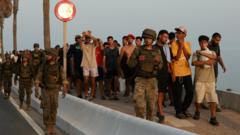
Spain's Socialist Prime Minister Pedro Sánchez has accused some EU leaders of attacking his country instead of showing solidarity during the recent migrant surge in the North African enclave of Ceuta. His criticism was aimed mainly at Italy.
Italy's ruling party Fratelli d'Italia, led by Prime Minister Giorgia Meloni, posted images of migrants running through Ceuta's streets, mocking the 'Sánchez model'. Meloni then suspended the Schengen free-movement agreement with Spain, citing a security threat. Madrid rejects this, saying Ceuta is outside the Schengen zone and the crisis has been contained.
Meloni is under electoral pressure: her coalition is losing support to a new anti-immigrant party ahead of elections next year. Her call for an urgent EU interior ministers' meeting was signed by nearly two dozen EU heads of state demanding an end to policies that could act as 'pull factors'. They refer to Spain's plan to let hundreds of thousands of undocumented migrants apply for residence and work permits. Spain says an ageing population needs workers.
Sánchez points to a Supreme Court ruling that bars immediate pushback of people arriving by sea, saying smugglers twisted it into a promise of an easy path to Europe. However, most migrants were Moroccans who did not need smugglers. The idea that 'Spain is open' spread online through accounts with tens of thousands of likes, showing people in wetsuits and swimmers filmed near Ceuta. The promises were false: those who arrived found no food, shelter or route onward, and most turned back.
The crisis has drawn international reactions. US President Donald Trump, angry at Spain's opposition to his Iran policy, described it as a 'catastrophe' and an 'invasion'. Russia also welcomed the chaos, as it weakens European unity over Ukraine. Morocco blamed 'criminal organisations', though its border forces must have seen the crowds. Sánchez refrains from blaming Morocco, calling it a 'good ally', but critics demand a firmer stance. The question of whether migrants were deliberately 'weaponised', as in Belarus, remains unanswered.