Šeduva’s Lost Shtetl Museum: A World-Class Tribute to a Vanished Jewish World
In northern Lithuania, the Lost Shtetl Museum in Šeduva offers a poignant, architecturally stunning memorial to the region's Jewish community. Built with private funds, it combines a museum, memorial park, and restored cemetery to tell the story of Jewish life before the Holocaust.
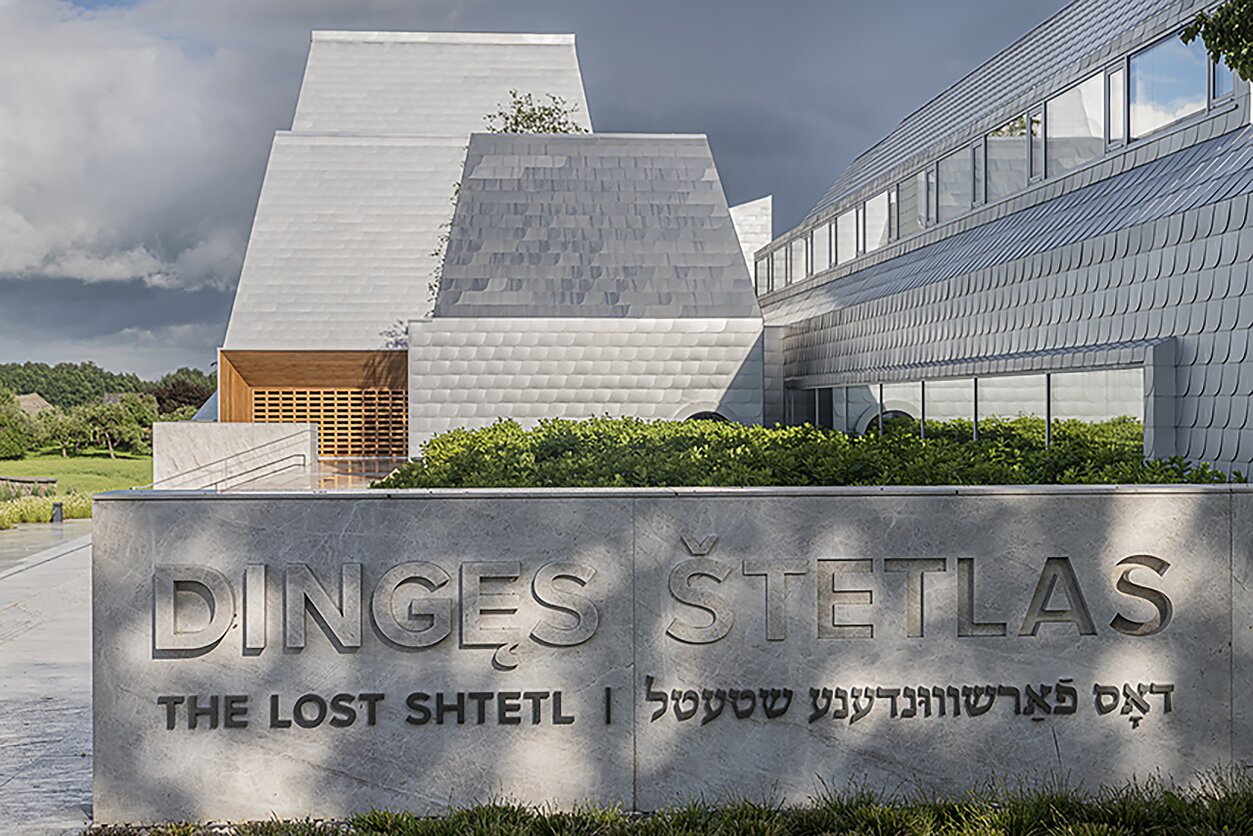
Driving through the quiet agricultural landscape of northern Lithuania, one does not expect to find a world-class architectural monument. Yet in the small town of Šeduva, the Lost Shtetl Museum (Zudušais štetlas muziejus) rises opposite a restored Jewish cemetery, its striking design a minimalist cluster of gabled volumes clad in a textured façade. The museum, built through private philanthropy via the Switzerland-based YouthAid Foundation led by an anonymous descendant of the victims, is a gift to international cultural preservation.
The project aims to honor, preserve, and revive the historical and cultural memory of Šeduva’s Jews. It serves as a gateway to the rich civilization of Lithuanian shtetls, which in the interwar period numbered over 200, with Jewish communities comprising 20–70% of local populations. Designed by Finnish architects Lahdelma & Mahlamäki, the building reflects traditional shtetl architecture, with the synagogue roof symbolically tallest.
Surrounding the museum is the Lost Shtetl Memorial Park, designed by Enea Landscape Architecture. This “Living Landscape of Memory” follows the path of the town’s Jews in August 1941 to the Liaudiškiai Forest execution site. Over 200 native trees, wetlands, meadows, and apple orchards recreate the journey. A large daffodil planting is part of the international Daffodil Project, honoring the 1.5 million children killed in the Holocaust.
Inside, nine galleries trace centuries of history, developed by a Lithuanian curatorial team with experts from Germany, Israel, Poland, and the US. The exhibition relies on scholarly research, original artifacts, and testimonies from descendants worldwide. It humanizes the community: Jewish residents were tailors, shoemakers, shopkeepers, but also ran schools, two synagogues, and the town’s power station. Lithuanians worked in agriculture, creating an interdependent economy.
A powerful narrative thread uses three cinema theaters showing original docudramas by director Roberta Grossman. The first depicts peaceful interwar coexistence; the second shows the onset of WWII and propaganda; the third shows families fleeing execution. The museum also honors the Righteous Among the Nations, including Jan Zwartendijk and Chiune Sugihara, who issued life-saving visas from Kaunas.
The visit ends with a narrow, dark “Canyon” detailing the Holocaust, leading to the “Canyon of Hope” with high ceilings and a window framing the Lithuanian landscape – a space for quiet reflection. The interior, by Ralph Appelbaum Associates, draws inspiration from Litvak writer Grigory Kanovich’s work. The final gallery, Faces from the Past, shows historic faces fading into projected landscapes.
Outside, the restored Jewish cemetery spans 1.3 hectares with about 1,300 gravestones, the oldest from 1782. Audio stations throughout town and memorials by sculptor Romualdas Kvintas mark mass graves in the nearby forests. The museum ensures that Šeduva’s Jews are remembered not just for how they died, but for how they lived.
/nginx/o/2026/10/06/17958372t1h7032.jpg)