Women's Tour of Britain heads to Wales for two stages this week
The Tour of Britain Women has expanded to five stages for the first time, with two taking place in Wales featuring some of the world's top riders. The event is shadowed by the recent death of young cyclist Fin Tarling, intensifying calls for greater safety in the sport.
The Tour of Britain Women, which began on Wednesday in Cumbria and finishes on Sunday, 23 August, in Warwickshire, is being held over five stages for the first time this year, matching the men's race in stage count. Two of those stages take place in Wales: stage three covers 104.7km from Mold to the Great Orme in Llandudno, while stage four on Saturday runs 138.3km from Llanidloes to Hay-on-Wye, including the race's toughest climbs and a total ascent of 2,280m.
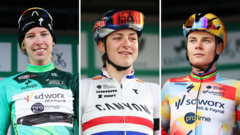
Several strong home riders are taking part, including British champion Zoe Backstedt, who sits 51st, 2 minutes 48 seconds behind race leader Lorena Wiebes of the Netherlands. The 21-year-old recently made her Tour de France Femmes debut, finishing 50th overall, and has already won British road race and time trial titles this season plus a sprint stage at the Tour de Suisse Femmes. Her sister Elynor Backstedt is also racing, while their father Magnus holds a sport director role with one of the teams.
The best-placed Welsh rider is Anna Morris, who sits 20 seconds behind the leader ahead of stage three despite crashing in stage two. She recently won two gold medals and a bronze in track cycling at the Commonwealth Games.
Safety concerns after Tarling's death
Many riders are wearing black armbands in tribute to 19-year-old Welsh cyclist Fin Tarling, who died last Friday in the Volta a Portugal after colliding with a van that had strayed onto the closed course. His death has intensified discussion around safety in cycling. During the Tour of Britain itself, an Australian rider reported narrowly avoiding a car during stage one, and stage two was halted for half an hour after a reported road accident near the route.
Riders and commentators note that increased media coverage of women's cycling could bring more funding into the sport and strengthen depth across the whole peloton, not just a handful of top riders.
/nginx/o/2026/08/20/17865455t1h8fae.jpg)