Could Syria become the arena for an Israeli-Turkish rivalry?
US-mediated talks between Syrian and Israeli representatives resumed in Jordan after Israel struck an airfield in Idlib province, as analysts warn Syria risks becoming a battleground for Israeli-Turkish influence.
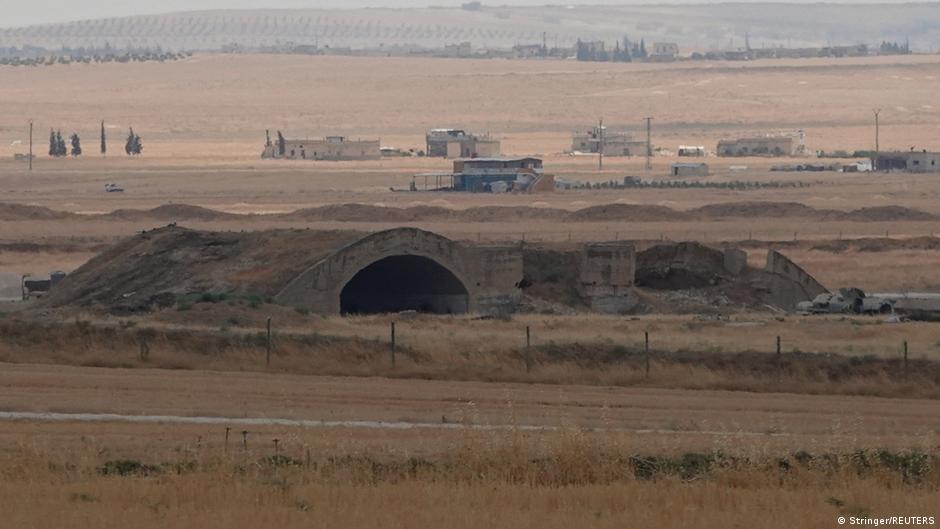
Syrian and Israeli representatives met in Jordan last weekend for the first talks in months, mediated by the United States, aiming to ease tensions after Israel's August 18 strike on the Abu Duhur military airfield in Idlib province. Syrian sources say the runway and storage facilities were hit, with no fatalities reported.
Israel claims Syria violated or threatened to violate a prior security agreement by allowing Turkish forces to use the airfield, an accusation both Damascus and Ankara reject. Washington criticized the strike by its Israeli ally as an "unnecessary escalation," seen as a diplomatic signal of support toward Turkey and Syria.
Diverging assessments
Israel regards any potential Turkish military presence in Syria as a red line, though no public evidence confirms deployment plans. As early as April 2025, Reuters reported Turkey had inspected at least three Syrian air bases as part of a possible joint defense pact.
Bente Scheller of Germany's Heinrich Böll Foundation says there is no evidence Turkish troops are actually meant to be stationed there, and the strike should be seen against the backdrop of Israel's broader Syria policy and Turkey's expanding regional role. Marcus Schneider of the Friedrich Ebert Foundation argues Israel benefits from a weak Syria, since a sovereign state controlling its own airspace would limit Israel's freedom to strike Iran through Syrian territory.
Kurdish dissolution and closer US ties
On Tuesday, August 25, the Kurdish-led Syrian Democratic Forces announced their official dissolution. Turkey backs Syrian President Ahmad al-Sharaa and a unified Syria, including the Kurdish-majority northeast it has long targeted militarily.
Syria's relations with Washington have warmed: sanctions began easing in summer 2025, al-Sharaa was hosted at the White House in November, and the two leaders met again at the NATO summit in Ankara in July 2026. US troops withdrew from Syria earlier this year, and on August 24 Washington formally removed Syria from its state sponsors of terrorism list.
Analysts stress that Syria's greatest vulnerability lies not only in its exposure to two powerful neighbors, but in building a viable internal political order alongside its diplomatic gains.

