Syria's top Druze leader calls community 'integral part of Israel'
Syria's senior Druze spiritual leader Hikmat al-Hijri declared the Druze an integral part of the State of Israel, sparking sharp regional reactions and deepening tensions between Suwayda province and Damascus.
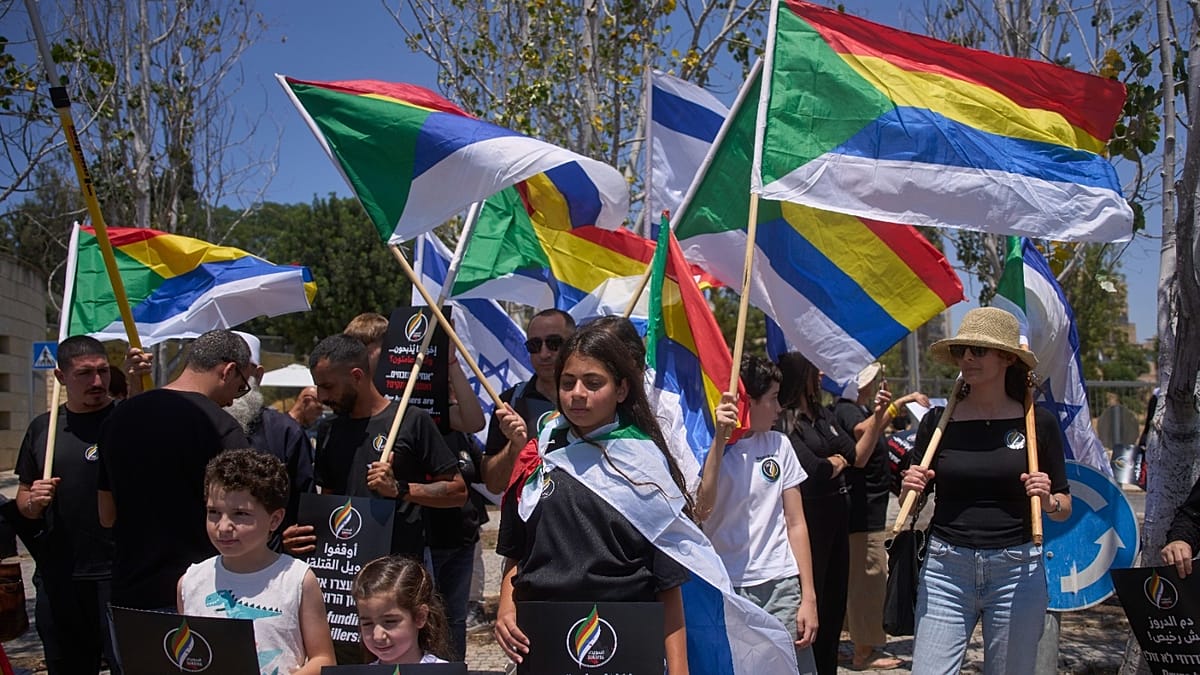
Syria's most senior Druze spiritual leader, Hikmat al-Hijri, told a gathering in Suwayda on Monday that the Druze community is "an integral part of the State of Israel." He praised Israel's model of state-building and said the two communities share common traits that, in his view, extend even to doctrine. He added that the region's people share a common fate and that the current period demands sacrifices to achieve stability.
Al-Hijri is one of Syria's three Sheikh al-Aql, the senior religious leaders of the Druze, and has become the most influential political and spiritual figure in Suwayda. The Druze faith is a monotheistic religion that emerged in the 11th century as an offshoot of Ismaili Islam and is now regarded as a distinct religion. Roughly 1 million Druze live worldwide, mostly in Suwayda province and the surrounding Jabal al-Arab, with smaller communities in Lebanon and Israel. Israeli Druze hold a distinct status compared with other Arab citizens, being subject to mandatory military service and traditionally serving in the Israeli military.
Tension with Damascus
Al-Hijri tied his vision for Suwayda's future to a "civil state" guaranteeing the rights of all communities without discrimination. He hinted at developments in the province that could be announced "within days," without giving details.
He has previously called for special administrative arrangements for Suwayda and raised the possibility of the province coming under international protection or joining another state. He publicly thanked Israel for its military intervention during clashes in July 2025, when Israeli aircraft struck targets in Damascus and elsewhere, which Israel described as protecting Druze communities. Syria's government condemned the strikes as a violation of its sovereignty.
Since Bashar al-Assad's fall in December 2024, al-Hijri and allied forces in the mostly Druze province have pushed for autonomy and resisted integration into the new Damascus government led by President Ahmad al-Sharaa. Armed clashes between local factions and government-affiliated forces have broken out periodically, and the province has refused to surrender weapons or accept Damascus-appointed security officials.
Sources close to al-Hijri denied direct negotiations with Damascus were underway, while confirming US mediation efforts focused on the fate of detainees held by both sides. Days before al-Hijri's remarks, a US-brokered Syrian-Israeli meeting took place in Jordan aimed at de-escalating tensions and discussing security arrangements in southern Syria. Al-Hijri does not speak for all Syrian Druze, some of whom have rejected efforts to link the community with Israel.