School principal Alijevs: switch to Latvian-language teaching should have happened in the 1990s
Romāns Alijevs, principal of Riga State Classical Gymnasium and a philosopher, said in the “Latvija 2035” discussion series that Latvia missed its chance to move to Latvian-language schooling early. He also criticised the lack of support for the unified school and the bureaucratic burden.

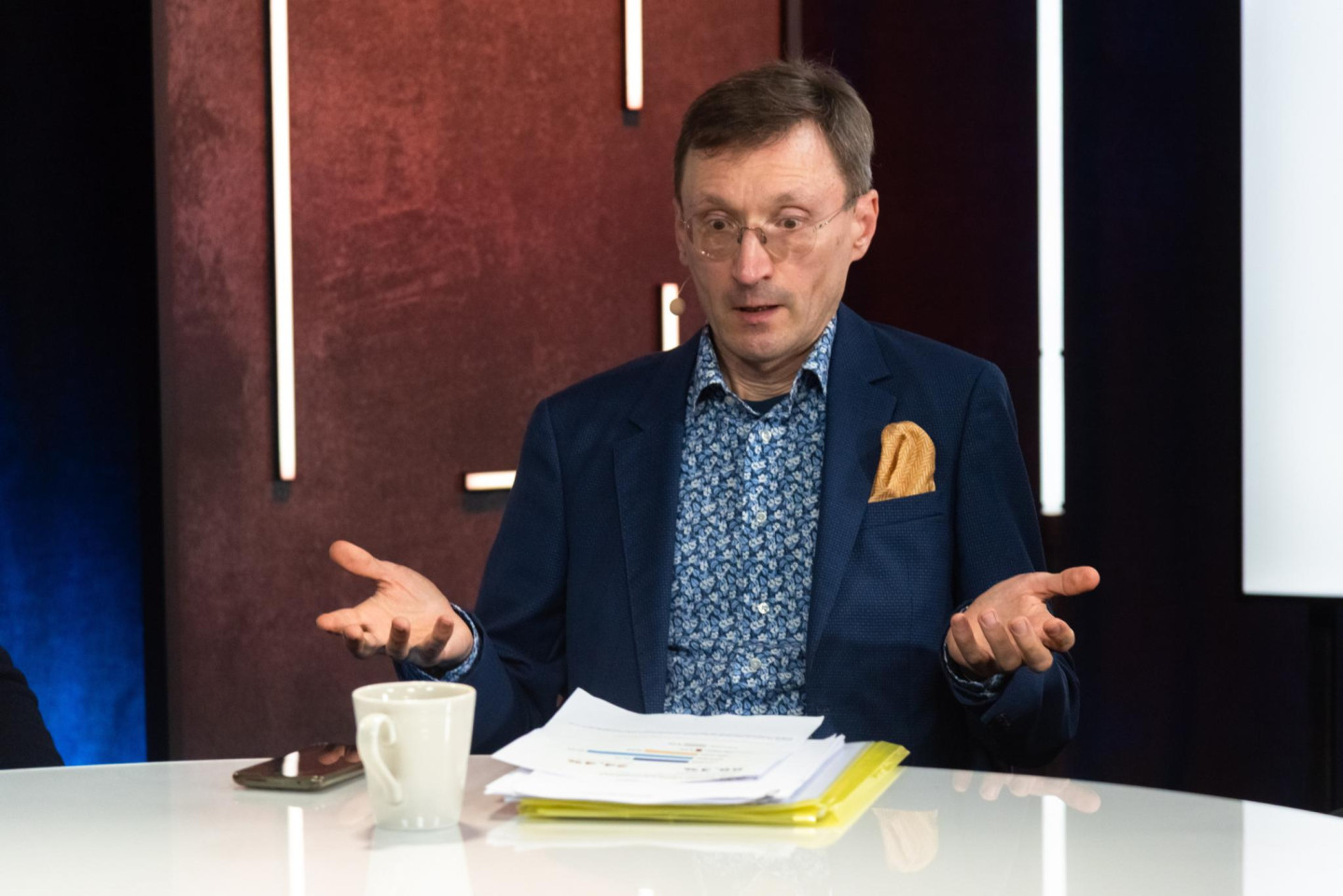
Romāns Alijevs, principal of the Riga State Classical Gymnasium and a philosopher, said on the programme “Latvija 2035”, which assesses Latvia's development since the restoration of independence, that the country missed the most suitable moment in the early 1990s to switch to teaching in Latvian. In his view, this still affects social cohesion today. The programme is hosted by former politician Andrejs Panteļējevs and is available on Jauns.lv, the JaunsTV YouTube channel and Spotify.
A missed opportunity
Alijevs has led a school since independence was restored. He supported the Popular Front and took part in the barricades. He says that at the outset he proposed that all schools move straight to Latvian-language instruction, and that at the time there was strong support from teachers of other ethnic backgrounds and from mixed families. The country turned to the issue only in 1995 and 1996. He blames a lack of resolve among politicians and school heads, and mentions the activity of supporters of Russian policy. At his own school, literature, history and geography were taught in Latvian from 1993 on the school's own initiative, with mathematics added later.
The unified school and reforms
Alijevs considers the current shift to the unified school, where teaching is only in the state language, worth supporting but insufficiently backed. In his view, quality methodological support and new teaching materials are lacking, and many teachers did not work during the bilingual education period and are unfamiliar with the communicative approach. As a result, teachers often feel left alone in the classroom.
He regards the competence-based education project “Skola 2030” as a good idea, but says the reform came about 15 years late. The volume of content is still too large, and in schools where management did not back the idea, work went on as before, creating inequality. The principal is also sceptical about plans to ease exam requirements, including for Grade 9 exams, saying this reduces pupils' motivation.
Bureaucracy and the future
Alijevs notes that reforms increase the administrative burden, while schools have no staff positions for handling documents, legal and accounting matters. Closing the conversation, he urged people to remember that everyone living in Latvia is “in the same boat”, and said he was confident the country would preserve its values.
/nginx/o/2026/10/09/17964579t1h73e0.jpg)