Slovak PM accuses Merz of 'blackmail' over demand for Ukraine aid in EU budget
German Chancellor Friedrich Merz has signalled he will block the EU's seven-year budget unless a deal on financial aid for Ukraine is reached. Slovakia's prime minister, Robert Fico, called the move 'typical blackmail'.
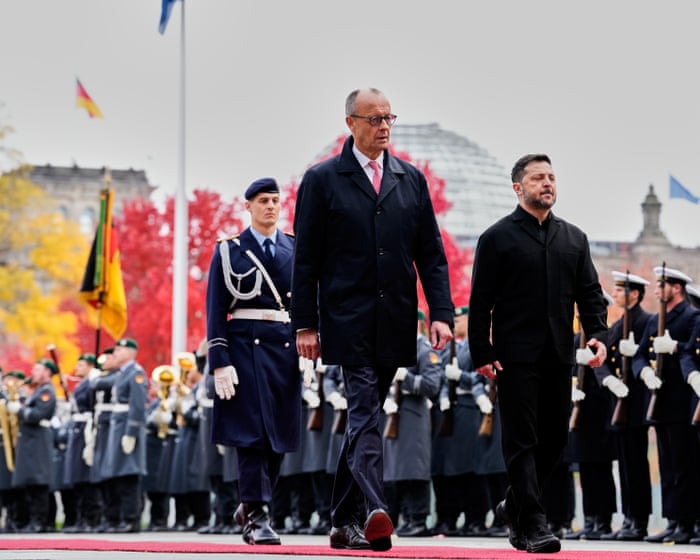
German Chancellor Friedrich Merz has signalled that Germany will block the European Union's seven-year budget unless member states agree on financial aid for Ukraine. The stance has angered several central European governments and sets the stage for stormy negotiations later this month.
Slovakia's prime minister, Robert Fico, described as Russia-friendly, told reporters in Bratislava: "What the chancellor is doing is typical blackmail, and I will not give in to it." He spoke alongside Czech prime minister Andrej Babiš, whose populist government also refuses to join a future loan for Ukraine. Babiš said he did not know why Merz was saying it.
What Merz is asking for
Merz wants EU leaders to discuss Ukraine's financing needs at a summit in Dublin on Friday. In a letter to European Council president António Costa, he said bilateral aid to Ukraine is distributed unevenly and carried mostly by a few member states. He called a "collective commitment … without exception" an essential prerequisite for closing Ukraine's funding gap and for discussing further matters, particularly those with financial implications.
Berlin also wants decisions on Ukraine funding taken by qualified majority rather than unanimity, so that a single government cannot block EU decisions.
Background
Last year the EU agreed to lend Ukraine €90bn, meant to cover two-thirds of its military and civilian costs for 2026 and 2027. Russian bombardment has since added costs, and President Volodymyr Zelenskyy has asked for €70bn to fill a shortfall. The EU endorsed that figure and pledged €45bn, expecting allies such as the UK and Canada to provide the rest.
Merz led an effort last year to use €210bn of frozen Russian sovereign assets in the EU, but opposition led by Belgium scuppered it. Hungary, Slovakia and Czechia opted out of the €90bn loan, and Bulgaria has now joined them after Moscow-friendly prime minister Rumen Radev's election.
Costa wants a deal on the 2028–34 budget by the end of the year, before elections in France, Poland and Italy in 2027. Ukraine's financing will also be discussed at a special budget summit on 26–27 November.