SpaceX eyes tower catch for next Starship after auspicious end to 13th flight
SpaceX's 13th Starship test flight ended with an intact splashdown in the Indian Ocean, and the company now plans to attempt catching the ship with the launch tower's mechanical arms on the next mission.
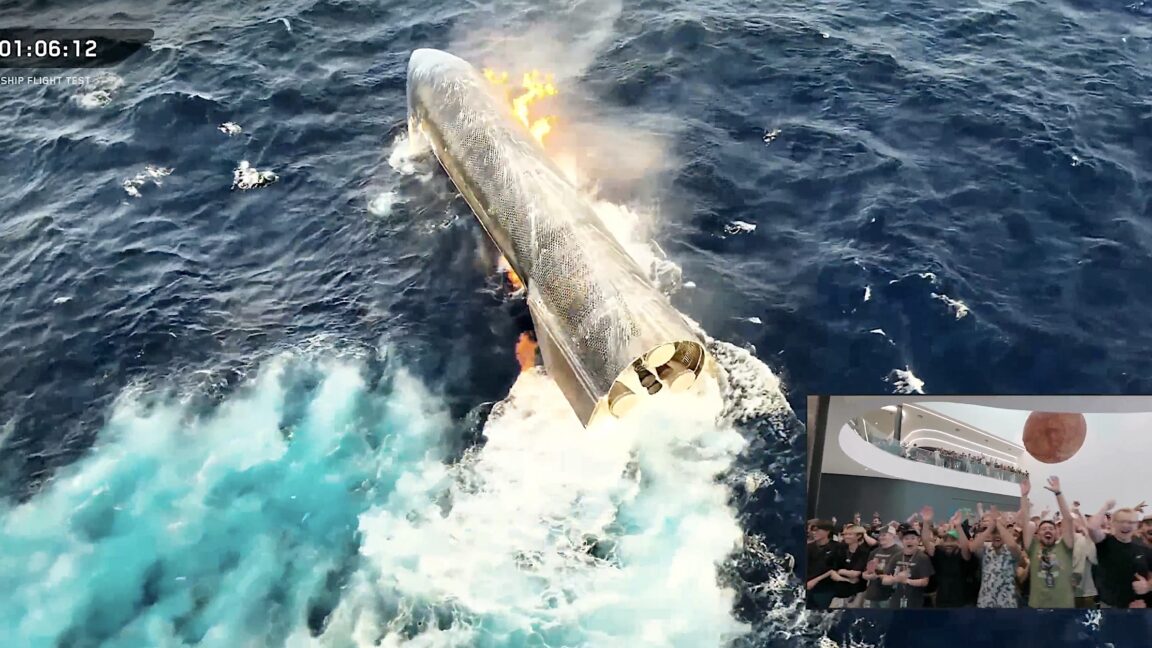
On Friday, SpaceX conducted its 13th full-scale Starship test flight, which concluded with a precise, intact splashdown in the Indian Ocean west of Australia. Unlike previous tests, the ship remained buoyant and upright, allowing engineers to inspect its heat shield via drones. More than 18,000 ceramic tiles endured temperatures up to 2,600°F (1,430°C) during reentry.
Company founder Elon Musk stated that, pending data review, the next flight will attempt to catch Starship using the launch tower's mechanical arms, similar to the Super Heavy booster catches already performed. This would be a step toward reaching orbit and enabling rapid reuse.
While Starship succeeded, the Super Heavy booster's controlled landing failed—some Raptor engines did not relight, and it impacted the Gulf of Mexico. SpaceX noted progress compared to the previous flight in May.
During the mission, Starship deployed 20 next-generation Starlink V3 satellites, which, though suborbital, provided first in-space performance data. A brief restart of one Raptor engine was also conducted, marking a key capability for future orbital missions.
NASA Administrator Jared Isaacman praised the flight, highlighting Starship's role in the Artemis lunar program. The next goals include an orbital flight and an orbital refueling demonstration, critical for deep-space missions.