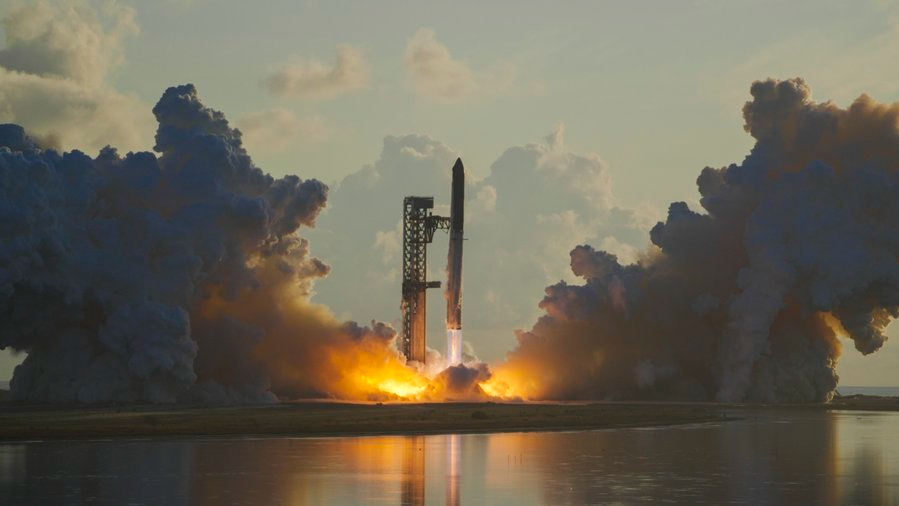
SpaceX's Starship reaches orbit for the first time, deploys next-generation Starlink satellites
On its 14th test flight, SpaceX's Starship rocket reached full orbital velocity for the first time and deployed 26 next-generation Starlink V3 satellites. Despite engine issues during ascent, the mission ended with a controlled splashdown in the Pacific Ocean.
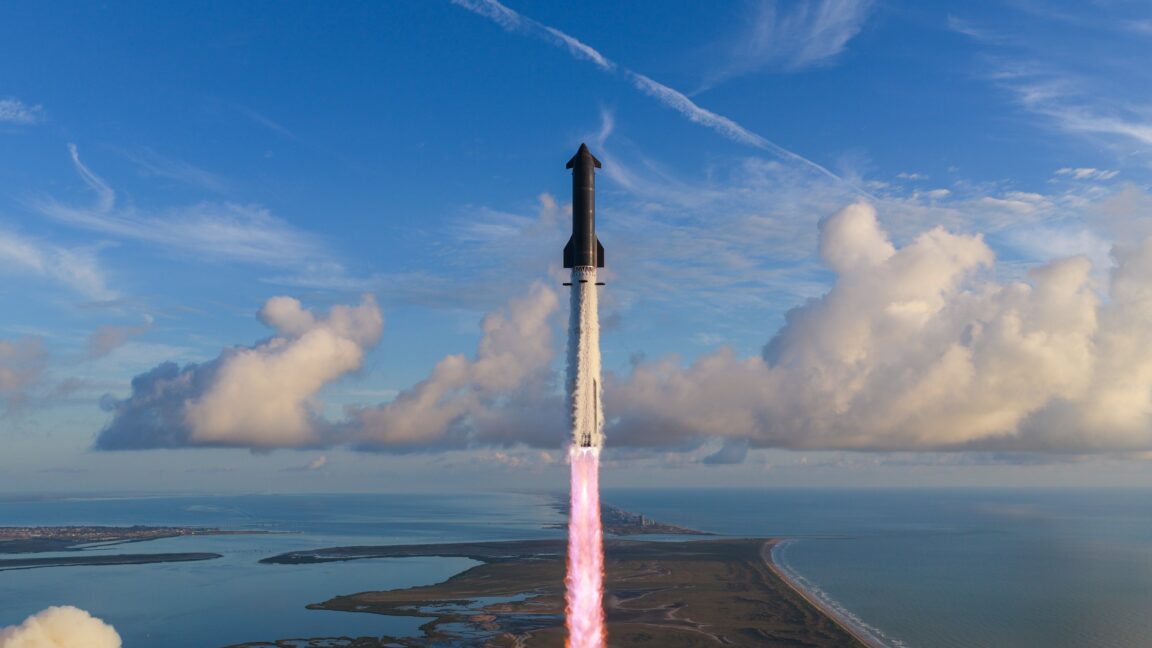
SpaceX launched its Starship rocket on its 14th test flight Monday morning from Starbase, Texas, and for the first time allowed the vehicle to reach full orbital velocity instead of the suborbital trajectory used on previous flights. The rocket lifted off at 8:49 am EDT powered by 33 Raptor engines generating up to 18 million pounds of thrust. After stage separation, the Super Heavy booster made a controlled splashdown in the Gulf of Mexico while the upper stage continued climbing toward space.
During ascent, one of Starship's six engines shut down prematurely, and two of the Super Heavy booster's 33 engines also failed to perform as expected. This briefly led SpaceX's flight team to consider aborting the orbital insertion burn. However, since the malfunctioning engine was not the one needed for orbit insertion, mission managers decided to proceed. The selected engine fired flawlessly for 19 seconds, adding about 204 mph to Starship's speed and placing it into a stable orbit roughly 171 miles (276 kilometers) above Earth.
Next-generation Starlink satellites
Once in orbit, SpaceX deployed 26 next-generation Starlink V3 satellites — the first time these satellites reached orbit, unlike a July suborbital flight when similar satellites burned up on reentry. Each satellite weighs about 2 metric tons and is too large to fit inside a Falcon 9 rocket. The satellites feature larger solar arrays and improved antennas, enabling each to add 1 Tbps of network capacity — ten times more than older-generation satellites. Future Starship flights could carry up to 60 such satellites at once.
SpaceX confirmed contact with all 26 satellites after separation. They were initially placed into a low-inclination orbit near the equator due to range safety restrictions, with higher-inclination orbits planned for future launches.
An early return
Due to the engine issues, SpaceX decided to cut the mission short and begin Starship's descent earlier than planned, forgoing a planned long-duration orbital endurance test. The vehicle successfully completed its de-orbit burn and splashed down in the northern Pacific Ocean near Hawaii about three hours after liftoff. The heat shield withstood temperatures up to 2,600°F (1,430°C) during reentry. As expected, Starship tipped over and broke apart after splashdown, unable to repeat the intact landing achieved on its previous flight in July.