Strong El Niño forecast to disrupt weather worldwide, with Indian monsoon especially at risk
The World Meteorological Organization warns that a strong El Niño developing in the Pacific will bring extreme heat, drought and flooding across the globe from August to October, threatening India's monsoon and adding to climate crisis effects.
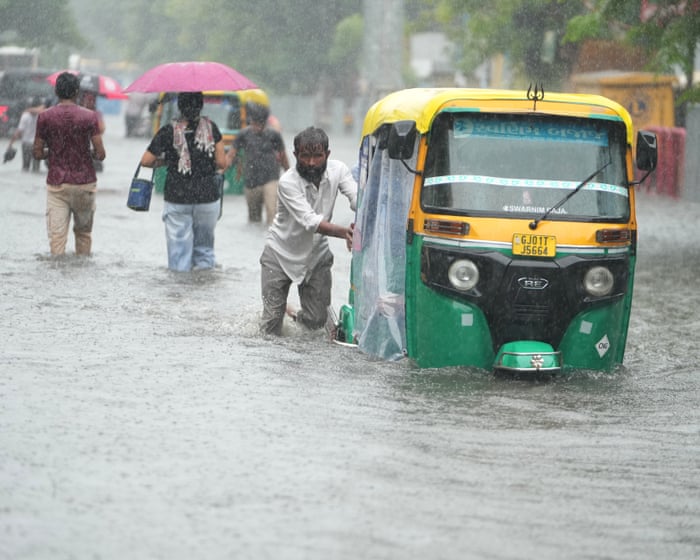
India's monsoon is under threat as meteorologists warn that a stronger El Niño system is taking hold and will bring hotter and drier conditions to many parts of the world. The prediction, released by the World Meteorological Organization (WMO) on Friday, covers the period from August to October.
The WMO said global temperatures will rise, with some areas getting more rain while others face drought. Marine heatwaves, which have already surprised scientists this year, are expected to intensify, with temperatures possibly exceeding 2.9°C above normal in several regions.
The forecast specifically highlights an increased probability of below-normal rainfall in the Indian Ocean basin, which could weaken the monsoon that Indian farmers depend on, leading to higher risks of drought, floods and wildfires.
Drier-than-usual conditions are also likely in parts of equatorial Africa west of the Horn of Africa, southern and eastern Australia, large areas of South America, and North America. Meanwhile, above-average rainfall is expected in southern Europe, central Asia, the Horn of Africa, and southeastern South America.
Already this summer, extreme weather has caused havoc: record-breaking heatwaves began in the UK in May, and wildfires in France and Spain have destroyed villages and displaced hundreds of thousands of people. Scientists say this year's El Niño has been supercharged by the climate crisis, with unusually warm Pacific waters suggesting it could become a "super El Niño" — a term the WMO avoids, but it warns the system will likely be stronger and more intense than usual.
WMO Secretary-General Celeste Saulo urged governments to prepare for heat, drought and potential floods. "El Niño is one of the most closely monitored climate phenomena in the world," she said, but "forecasts in themselves do not prevent hazards, people do." She added that the situation gives governments and communities a window of opportunity to anticipate risks and act before impacts unfold.
UN Secretary-General António Guterres said the El Niño is now "inside the house, and turning up the heat." He noted that the Pacific waters driving it have never been this warm so early in an El Niño, and temperatures are still increasing. "We are in uncharted territory," he said, warning that this year risks shattering every seasonal record and could drive even more severe effects worldwide. He also highlighted the danger to workers, with heat claiming lives on a growing scale and exposing billions of people to often life-threatening conditions.
Separate studies indicate that Europe's extreme weather and the increasing likelihood of drought and wildfires have been supercharged by the climate crisis.