Edinburgh student's time-lapses of fungi on dung draw millions of viewers
A 27-year-old trainee lawyer in Edinburgh films brightly coloured fungi growing on animal droppings, creating time-lapse videos watched by millions. His hobby has also led to the identification of two new species.
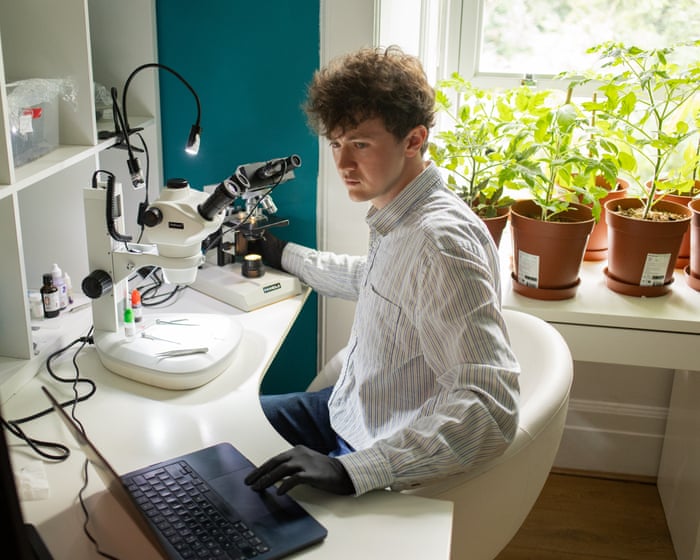
Alfred Drummond-Herdman, a 27-year-old trainee lawyer from Edinburgh, has turned his bedroom into a makeshift laboratory. The space is filled with terrariums and plastic containers holding cowpats, grouse droppings and rabbit pellets. He may well be the only person in the UK who receives animal faeces by post out of goodwill, he says.
The containers produce brightly coloured fungi that Drummond-Herdman photographs every 30 seconds, creating time-lapse videos watched by millions of people worldwide. Among the species emerging from his collection are inkcaps, fieldcaps and ascobolus, a fungus that resembles barnacles. He has formally identified two new species, with more waiting.
His interest in coprophilous fungi — fungi that grow on dung — began during the pandemic when he was walking in the Ochil Hills near Stirling. In Scotland one summer, he encountered cowpats covered in mushrooms. It looked like a forest, he says. He started identifying them online, which he describes as the beginning of a rabbit hole he has been going down ever since.
Drummond-Herdman is a self-taught amateur taxonomist. He works with other enthusiasts and experts on forums to study and identify British specimens. According to estimates from Kew, at least 2 million fungi species worldwide are still waiting to be discovered.
On Instagram, his account has amassed more than 60,000 followers, with some posts reaching millions of views. A recent video shows a slime mould known as dog's vomit slime mould apparently consuming a living ant. Another shows a conecap mushroom growing on deer droppings.
Drummond-Herdman says he is fascinated by the contrast between a cowpat — something few people want to be near — and the incredible beauty and complexity of the fungi. His time-lapses reveal the full lifecycle rather than a single snapshot.
He also notes that the boxes of dung do not smell, because they come from herbivores and consist mainly of undigested plant material. His goal is to inspire greater appreciation of nature conservation in the UK, especially fungi. He believes taxonomy is at the frontline of biodiversity research, and without it, studying habitat loss and native species would be impossible.