T. rex 'Gus' could become most expensive fossil ever, but that's a problem for scientists
A nearly complete T. rex skeleton named Gus, valued at $30 million, goes up for auction at Sotheby's on Tuesday, potentially breaking the record. Scientists worry that private collectors are pricing museums out of acquiring scientifically important specimens.
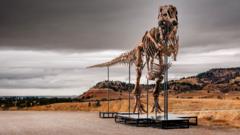
Almost 30 years after Sotheby's sold the T. rex Sue for $8 million, another remarkable specimen of this species will go under the hammer on Tuesday. The skeleton, known as Gus, is one of the most complete ever found — 61% of its bones are preserved. Its pre-sale estimate is $30 million, and it could become the most expensive dinosaur fossil ever, surpassing the Apex Stegosaurus that sold for $44.6 million in 2024. The minimum starting bid is $19 million.
Gus was discovered in South Dakota's Badlands region and named after the late landowner Gary "Gus" Licking. The team spent three years carefully excavating the fossil, followed by another three years documenting and reconstructing it in the lab. Experts note a huge bite mark on the skull, possibly from a fight, as well as broken ribs that healed.
However, this auction has reignited a debate in palaeontology: should such scientifically important specimens go to museums, or should fossil hunters be rewarded for their work? Cassandra Hatton, Sotheby's global head of natural history, notes that excavation is dangerous and expensive — hunters live in tents in the wilderness for months. She has reached out to museums worldwide, hoping Gus will end up in public trust.
Professor Susannah Maidment, a dinosaur researcher at London's Natural History Museum, warns that museums are already "priced out" of acquiring many specimens. She stresses that research is hindered when fossils are in private collections — scientific journals will not accept studies on specimens not publicly accessible. Thus, the fossil "no longer exists for science".
Independent palaeontologist Dr Fiann Smithwick adds that not only private collections but also museums can lose fossils — for example, due to war or natural disasters. However, all agree that without professional hunters, many fossils would never be discovered and saved from destruction by sea erosion or weather.