Ana Mendieta review – Tate Modern exhibition showcases the artist's profound connection to nature and mythology
Tate Modern in London presents a major exhibition of Cuban-born artist Ana Mendieta, whose work using blood, fire, and earth reconnects art with nature and ancient feminine mythology, from 15 July to 17 January.
A massive color photograph of an ancient ruin greets visitors outside Ana Mendieta's engrossing exhibition at Tate Modern's Blavatnik wing, immediately signaling that this is no ordinary show. Born in Havana, Cuba in 1948, Mendieta was sent to the US at age 12 to flee the revolution. Feeling like an outsider among white Americans, she found home in the past, excavating the origins of art and mythology.
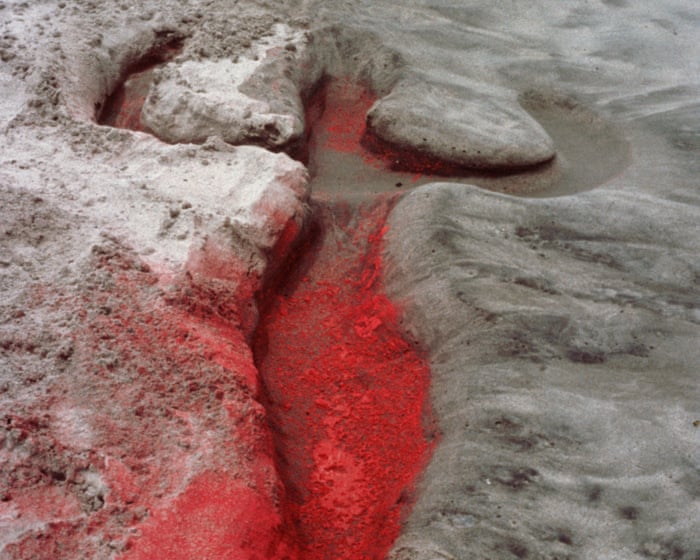
Mendieta created art from blood, feathers, flowers, and sand, often playing with fire: she would draw a human figure with gunpowder on the ground or a tree trunk, then ignite it. The flames leave a scorched shadow of a person, reminiscent of nuclear bomb victims or the ash-entombed dead of Pompeii. Confronted by a row of these burnt ghosts emerging from real tree trunks, one almost expects them to speak.
The human shape merging with nature is often Mendieta herself. In one photograph, she stands covered in brown mud against a tree, her body seeming to sink into the bark. In another, a female figure – both the artist and a universal, totemic being – slowly decays in a pool of water. Yet Mendieta also had a sense of humor: she poured animal blood on a sidewalk to resemble a human bloodstain and secretly photographed passersby trying to puzzle out the disturbing trace.
She returned to Cuba for the first time in 1980. In 1981, two years after her father's release from political prison, she carved stunning limestone sculptures in quiet nooks of a nature reserve. Her black-and-white photographs make these Rupestrian Sculptures (meaning "composed of rock") look like enigmatic traces of a lost civilization: curvaceous fertility goddesses resembling the Venus of Willendorf and abstracted female forms with vaginas like holy portals rise from rock formations. Mendieta hoped walkers would discover her works and ponder them.
Mendieta's art is rooted in organic matter – leaves, ashes – and produces unforgettable images. She died in 1985 at age 36 under highly controversial circumstances, but this exhibition focuses on her art, which has infinitely more life than the bricks her husband Carl Andre sold to Tate years before his acquittal. Were she still alive, Mendieta would be at the forefront of art in this century. The exhibition is at Tate Modern from 15 July to 17 January.
/nginx/o/2026/10/04/17955905t1h17d1.png)
/nginx/o/2026/08/28/17881066t1h2a63.png)