Tehran's streets as a battlefield of images: how Iran wages visual propaganda war
Since war broke out with the US and Israel, giant state-commissioned billboards with anti-American and anti-Israeli messaging have covered Tehran's buildings. A researcher explains how this imagery draws on an old storytelling tradition but has become an industrialised, AI-assisted process.

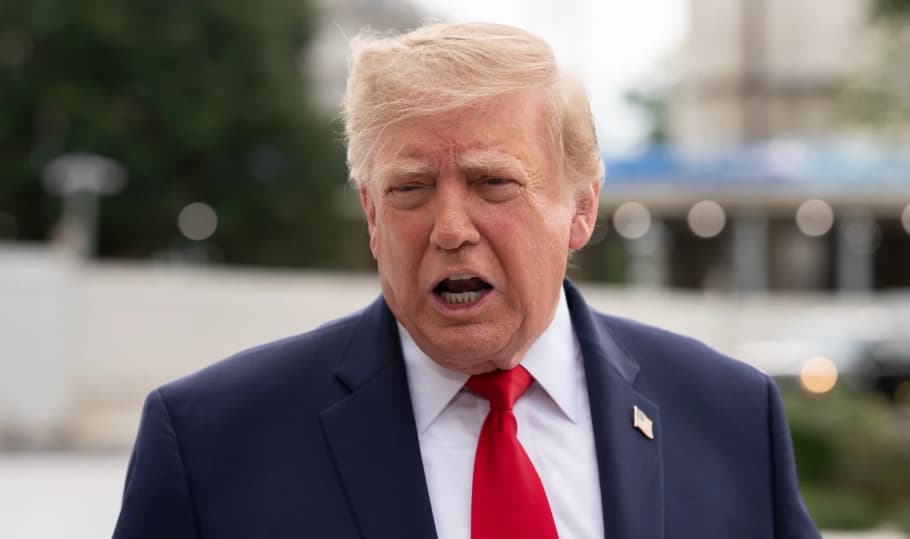
Since the outbreak of war with the United States and Israel, Tehran's major squares and avenues have been covered with enormous state-commissioned billboards carrying pointed political messages. One, installed on May 2 at Valiasr Avenue, shows US President Donald Trump with his mouth sewn shut and covered by a veil shaped like the Strait of Hormuz, at a time when talks to reopen the strait had stalled. Nearly a quarter of the world's oil passes through that waterway.
Other posters depict Iranian drones shattering the Star of David, protesters chanting "Death to America," and a lineage of religious leaders — from revolution founder Ruhollah Khomeini to the slain Ali Khamenei and his son and successor, Mojtaba Khamenei.
An old tradition in a new format
Anthropologist Sepideh Parsapajouh, a researcher at France's CNRS, explains that using walls for political expression dates back to the 1979 Islamic Revolution, but the practice has roots in an older storytelling tradition called "pardeh-khâni," in which a narrator recounted epic or religious tales in front of a large painted canvas.
During the Iran-Iraq War (1980-1988), murals were often painted by artists and students, sometimes at the request of fallen soldiers' families. Today the process is fully centralised: billboards are commissioned by government bodies, designed by semi-governmental organisations, and installed under the oversight of several institutions, including Tehran Municipality's Beautification Bureau.
AI and pop-culture influence
Artificial intelligence has sped up production of these billboards and shaped their content, with compositions increasingly borrowing the visual language of advertising and cinema. One mural in Fatemi Square, showing two colossal statues flanking the symbolic waterway of the Strait of Hormuz, drew attention from Western media for its resemblance to a scene from "The Lord of the Rings." The statues depict a slain Revolutionary Guard naval commander, Alireza Tangsiri, and historical national hero Rais Ali Delvari.
Parsapajouh says such imagery immortalises the dead as heroes within a broader national narrative. Still, the sheer presence of these billboards does not guarantee public support — many Tehran residents barely notice them anymore, while others challenge them through graffiti and other subtler forms of expression.