Floods, Fires and Foul Air Hit Siberia's Tyumen Region at Once
Siberia's Tyumen region is facing extreme weather this summer — southern flooding along the Tura River has caused mass fish deaths and tainted drinking water, while record wildfires rage in the north. Experts link both extremes to climate change.
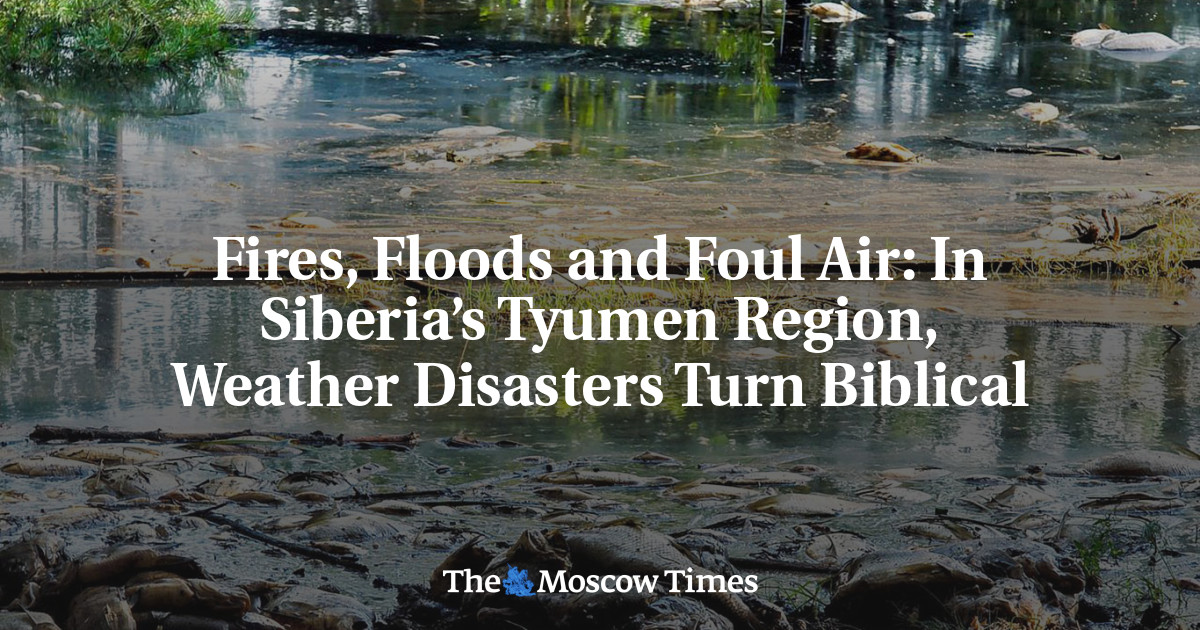
The Siberian city of Tyumen has experienced an unusual convergence of weather extremes this summer. Nearly daily heavy rain in June and July pushed the Tura River to 8.96 meters by early August, just short of the 9.15-meter record set in 1979. As water levels rose, residents reported an unbearable stench from the river and thousands of dead fish washed ashore.
One local resident told journalists she had to keep her windows shut at night because of the smell, while daytime temperatures in July hit a record 30 degrees Celsius. Tap water in the city of more than 800,000 people, largely drawn from the Tura, began smelling of sewage and rotten eggs, with some residents reporting rashes and food-poisoning symptoms.
Regional authorities declared a state of emergency in Tyumen and the surrounding district on July 28, though the consumer watchdog Rospotrebnadzor said the water met safety standards, while still advising residents to boil it or use bottled water instead. Cleanup crews collected nearly a metric ton of dead fish from the riverbanks in just two days last week.
Low oxygen and industrial runoff
An environmental expert, speaking anonymously, explained that the disaster stemmed from low oxygen levels in the water: vegetation submerged for almost two months began to rot, consuming oxygen the fish needed to survive. Waste from local factories may have compounded the problem.
Meanwhile, in the region's north, the Yamalo-Nenets autonomous district is battling record wildfires fueled by an unusual influx of warm air from Central Asia into the Arctic. Governor Dmitry Artyukhov declared a district-wide emergency on July 30, when burned area already topped 12,000 hectares. More than 600 people have joined firefighting efforts, and by midweek the fires had consumed over 37,000 hectares of untouched taiga.
The expert said both extremes — southern flooding and northern heat — are consequences of climate change. Russia recorded its hottest July since records began in 1891, and wildfires have destroyed more than 4 million hectares nationwide this year. The expert suggested Tyumen shift its water supply to underground sources, arguing that current infrastructure isn't built to withstand such climate extremes.