Lithuania's Trakai imperilled by overtourism and overdevelopment
Environmental officials warn that rising tourism, lakeside development, illegal dumping and unauthorised tree cutting increasingly threaten the fragile ecosystems of Lithuania's Trakai region.
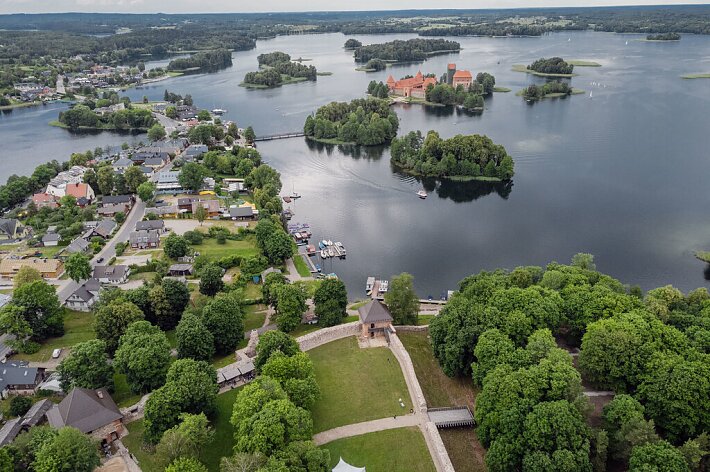
One of Lithuania’s most treasured natural and cultural landscapes, the Trakai region, is facing mounting environmental pressure. According to environmental officials, rising tourism, lakeside development, illegal dumping and unauthorised tree cutting are increasingly threatening the area’s fragile ecosystems.
Known for its medieval island castle, dozens of lakes and extensive forests, Trakai has long been one of Lithuania’s most visited destinations. But conservation experts warn that growing numbers of visitors and expanding residential development are testing the region’s ecological limits.
Tadeuš Ablačinski, director of Lithuania’s Forest Control Department, said the condition of the lakes is becoming an increasing concern. Intensive recreation, urbanisation of shorelines, wastewater management problems and growing water traffic are directly impacting water quality and ecosystem stability.
Each summer, visitor numbers far exceed what the region’s infrastructure was designed to accommodate, bringing heavier traffic, larger volumes of waste, increased noise and greater pressure on sensitive natural habitats.
One of the most visible environmental challenges is the growing use of motorboats and personal watercraft on Trakai’s lakes. Experts say engines contribute to noise pollution, fuel contamination and shoreline erosion, while waves generated by jet skis disturb shallow-water habitats, fish spawning grounds and nesting sites for water birds.
Lithuanian law restricts where personal watercraft may operate, particularly in protected areas, and prohibits navigation near beaches, islands and shorelines. However, enforcement becomes particularly challenging during the busy summer tourist season.
Illegal dumping remains persistent despite years of public awareness campaigns. Construction debris, old tires, furniture, household waste, plastics and even hazardous materials are regularly discovered in forests and along lakeshores. Used tires remain a particularly common problem because proper disposal can be costly.
Authorities now use a wider range of enforcement tools, including public reporting systems, social media monitoring, waste-tracking databases, higher financial penalties and confiscation of vehicles used to transport waste illegally.
Reports of illegal tree cutting have also increased steadily. According to the Environmental Protection Department, authorities received 877 reports of possible illegal cutting in 2024, rising to 1,010 in 2025. By May 20 this year, another 461 reports had already been registered. Property owners and businesses sometimes remove trees and shrubs to improve lake views, create recreational areas or build access roads, accelerating shoreline erosion and destroying wildlife habitats.
Ablačinski said that protecting the region will require more than stricter enforcement. “Control measures alone are not enough. We need continuous public education, clear rules and a long-term strategy for sustainable development,” he said. He added that people must stop treating the Trakai region as an inexhaustible resource and begin seeing it as an exceptionally sensitive and limited area that requires responsible, long-term protection.