Why the Middle East Oil Shock Failed to Rescue Russia's Budget
Despite the Strait of Hormuz crisis initially pushing oil prices higher, Russia's oil and gas revenues this year remain below previous years' levels, and analysts warn the full-year outcome could be even weaker.
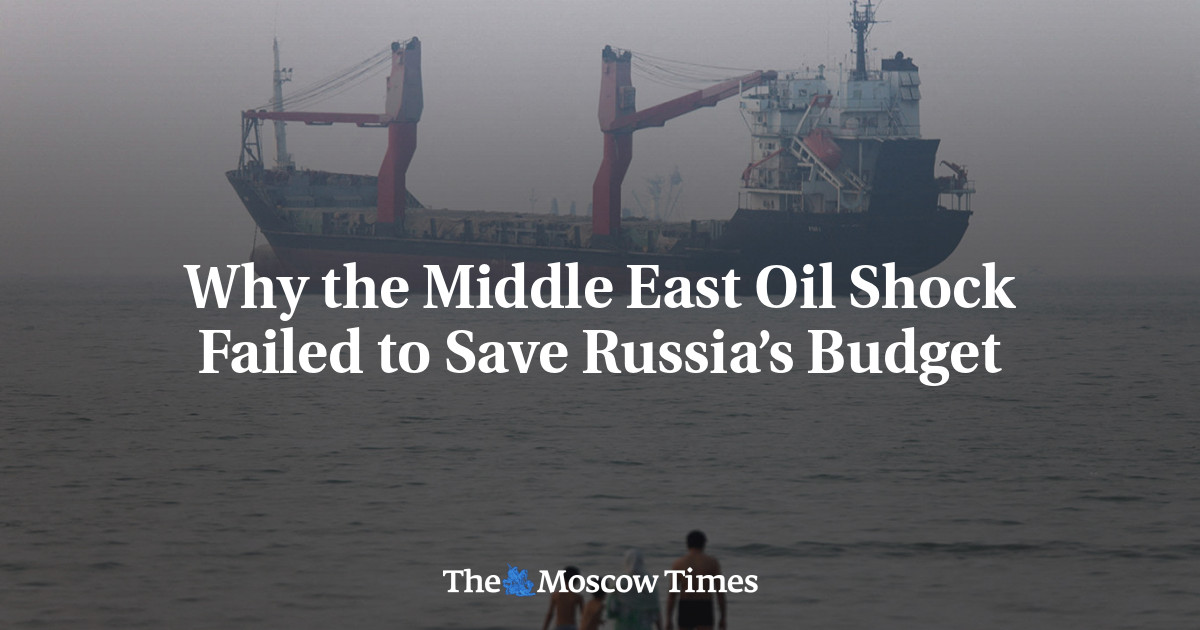
When the U.S. and Israel launched military action against Iran, many observers expected Russia to gain significantly as the effective closure of the Strait of Hormuz disrupted roughly a fifth of global oil supplies, pushing countries toward Russian crude as an alternative. Six months on, that windfall has proven far smaller than anticipated.
Over the first seven months of the year, Russia's federal budget collected 4.6 trillion rubles (about $55.2 billion) in oil and gas taxes — only 127.6 billion rubles above original projections. Compared with previous years, revenues actually declined: down 20% year-on-year and down 35% from the 2022 peak.
Why the expected boost didn't materialize
Urals crude initially spiked from $56.60 a barrel in February to $112.30 in April. But markets stabilized quickly as suppliers found workarounds through the Strait of Hormuz and alternative routes via the Gulf of Oman, the Red Sea and the Suez Canal. China also sharply cut crude imports by drawing on its large stockpiles, easing global pressure. By July, Urals had fallen back to around $60 a barrel.
A stronger ruble further eroded revenues in ruble terms — the budget assumed an exchange rate of 92.2 rubles per dollar, but the actual average was 76.5, meaning each dollar earned converted into fewer rubles for the treasury. Ukrainian drone strikes on Russian refineries and energy infrastructure also took a toll, as acknowledged by Russia's Central Bank.
Analysts remain cautious about the full-year outlook, with some predicting revenues will merely match last year's level and others warning they could fall to levels last seen in 2020. Meanwhile, the state budget deficit, driven by war spending, has already reached 6.5 trillion rubles — nearly double the annual target — forcing Moscow to rely increasingly on squeezing tax revenue from the domestic economy.