'Flamin' cockatoos' lose vast habitat to bushfires in Victoria – can the species survive?
Bushfires in Victoria, Australia, have destroyed 70% of the core habitat of endangered pink cockatoos, leaving only a handful of old trees suitable for nesting. Volunteers and conservationists are trying to save the species by building artificial hollows.
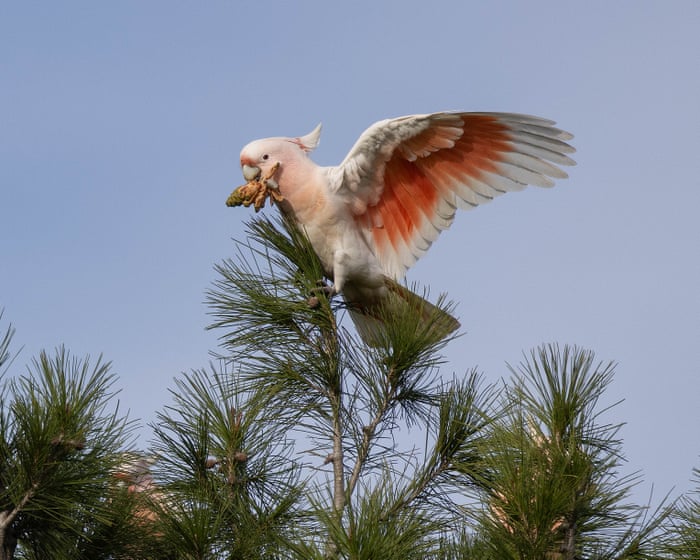
At the entrance to Wyperfeld National Park in north-west Victoria, more than a dozen pink cockatoos, also known as Major Mitchell's cockatoos, are scattered across Aleppo pines, not the native conifers they rely on. Inside the park, 70% of the cockatoo's core habitat, an area called the 'pine plains', was scorched in January's devastating bushfires. Two fires in 12 years have been devastating for the birds at Wyperfeld, the largest breeding site for the species in Victoria. Previously, there were 178 large, old native pines within the burnt area; barely a handful remain.
Ecologist Dr. Victor Hurley, who has monitored the birds for decades, says the species depends on slender cypress pines (Callitris gracilis) for breeding hollows. These trees must be at least 85 years old, ideally 125 or more, to accommodate a growing cockatoo family. Very large, old pines were already rare due to past land clearing and the 2014 fires, which destroyed 97% of known cavity-bearing trees in the burnt area. The 2025-26 bushfires torched 440,000 hectares across Victoria, including 59,000 hectares in Wyperfeld park.
The fires also affected other endangered birds. Eastern bristlebirds lost 82% of their habitat at Howe Flat near Mallacoota, with a 30% population decrease. In South Australia, fires in Deep Creek National Park impacted half the habitat for the western beautiful firetail and Mt Lofty Ranges southern emu-wren.
Hurley and a volunteer group called the Mallee Woodpeckers have built about 150 artificial hollows in the park, using repurposed power poles and carved dead trees. They chainsaw a slice out of a tree, carve out a space at least 20 cm wide, and replace the bark to make it weatherproof. Parks Victoria rangers are also planting more slender cypress pines to replace those lost.
Barengi Gadjin Land Council, representing local traditional owners, says the destruction of cockatoo habitat is a major concern, as the bird features in their stories. While they support recovery efforts, it will be many years before the trees can support the population again. The next cohort of pines sprouted in the 1990s and are still half a century away from being suitable for nesting hollows. In the meantime, the birds feed on Aleppo pines and act as their main seed dispersers. Artificial hollows are not an ideal solution, but they are the only one available in our lifetime, says volunteer Fiona Murdoch.