'It's only going to get worse': wildfires forcing firefighters to make impossible choices
The climate crisis is fuelling more intense wildfires, pushing them to new parts of the world, and forcing firefighters to ration resources and decide which blazes to fight.
A Growing Global Crisis
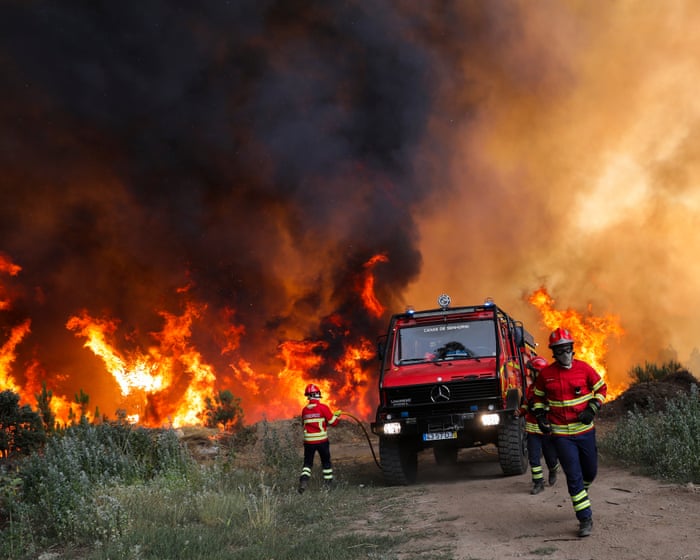
Climate change is driving more severe wildfires that are spreading into previously unaffected areas, forcing firefighters to make agonizing triage decisions. César Alcaraz, an officer with Alicante's provincial firefighters, compares his job to that of a doctor in an emergency room with too few ventilators. He notes that when two or three fires break out simultaneously, immediate triage is required.
Deadly wildfires have engulfed western Europe this month as a result of three heatwaves that turned lush vegetation into dry tinder. France, Portugal, and Spain have seen a record number of wildfires for this time of year, with an unprecedented area burned in France and 13 deaths in Spain. The UK experienced 19 separate wildfires, prompting experts to warn of a 'firewave' more widespread than ever.
Health and Environmental Impacts
Smoke from 100 fires in northern Ontario made Toronto the most polluted major city in the world on Wednesday, before drifting to New York. A study last year found that Canadian wildfire smoke caused 82,000 premature deaths in 2023, including 33,000 in the US and 22,000 in Europe.
Resource Strain and Tactical Shifts
In France, firefighters tackled 250-300 fires simultaneously over three weeks, according to Julien Marion of the civil protection agency. Spanish firefighters, accustomed to a few fires at a time, now struggle with increased numbers and intensity. Wet winters and springs that boost vegetation growth exacerbate the situation by providing more fuel.
'Response capacity is limited,' said Juan Caamaño of the Pau Costa Foundation. 'When we face huge fires, it's like trying to put firefighters on a beach to stop a tsunami.'
New Strategies and Policy
In the UK, fires have broken out from cities to national parks. A wildfire in Walthamstow, east London, drew 125 firefighters. In Scotland’s Cairngorms national park, 300 hectares burned. The London Fire Brigade has purchased four all-terrain vehicles to reach inaccessible areas and is promoting natural fire breaks such as mowing grass and clearing gutters.
The number of firefighters in the UK has dropped by 12,000 since 2010, delaying response times. 'This is only going to get worse,' said Steve Wright of the Fire Brigades Union.
Global Perspective
Fire seasons in North America and Australia are lengthening and increasingly overlapping, hindering resource sharing. By 2050, the overlap could reach 4-29 days per year. While climate breakdown is the main driver, El Niño exacerbates the risk.
Spain's Prime Minister Pedro Sánchez stated: 'The climate emergency kills. All levels of government and society must rise to the challenge.' However, carbon-cutting policies remain insufficient. Controlled burns are still novel in Europe, though Canada and Australia incorporate Indigenous fire management.
In late June, EU member states approved a non-binding wildfire risk management strategy that encourages prescribed burns and diverse landscapes. The EU's civil protection mechanism saw record requests in 2025. Nevertheless, Caamaño noted that teams are deployed in unprecedented extreme situations. 'I have the feeling that we're always behind the emergency,' he said.