Ukraine's released civilian captives left without state support after freedom
Thousands of Ukrainian civilians held captive in occupied territories return to face housing, healthcare and bureaucratic hurdles, as the state provides no systematic support. Rights advocates are pushing for a dedicated national agency to address the problem.
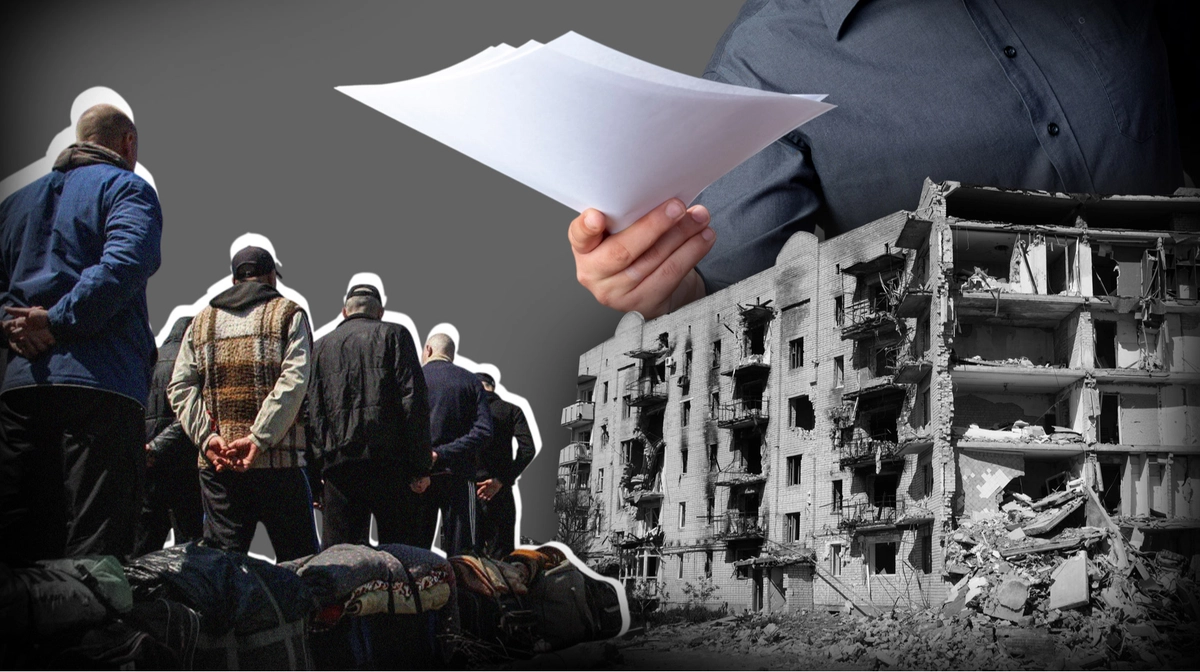
Since 2014, thousands of Ukrainian civilians have been imprisoned in occupied territories for openly opposing the occupation regime or on fabricated charges. Ukrainian law refers to them as people deprived of personal freedom due to armed aggression, though they are commonly known as civilian captives.
After an exchange or self-directed escape, these people first pass through regional hospitals for 21 days of diagnostics — not full rehabilitation or treatment. Dental care is a major unaddressed issue, since nearly all captives lose teeth from torture or detention conditions, yet the state offers no free dental program, leaving the cost to charities or victims themselves. At most, a released person receives a backpack with basic items.
The situation is even harder for those who escape Russian prisons on their own, without documents. Lacking evidence such as photos, video or witnesses, they struggle to prove they were even held captive — and without that confirmation, they cannot access any state services. Rights defenders say the case managers the state claims to provide essentially don't exist in practice, and released captives often don't know basic things like how to reach a family doctor or use government service portals.
Most civilian captives come from occupied territories where their homes are destroyed or inaccessible. One-time state payments and per-year-of-captivity compensation don't cover housing costs for long, and a proposal by then-deputy head of the President's Office Iryna Vereshchuk to issue housing vouchers for civilian captives, floated a year ago, has still not been implemented.
Those released outside formal exchange procedures face even steeper hurdles: in 2025, 81% of applications to the commission determining captive status were rejected due to lack of formal proof. Advocates note the underlying law predates the full-scale invasion and doesn't fit today's reality.
To address this, rights organizations are proposing a National Agency for civilian captives that would maintain a unified registry, coordinate medical and psychological rehabilitation, and attract international funding.