Ukraine's one-time test used fully autonomous drones to kill Russian soldiers
Two years after a battlefield test, a Ukrainian drone manufacturer revealed that fully autonomous drones killed Russian soldiers. This is the first known instance of such technology being used in actual combat.
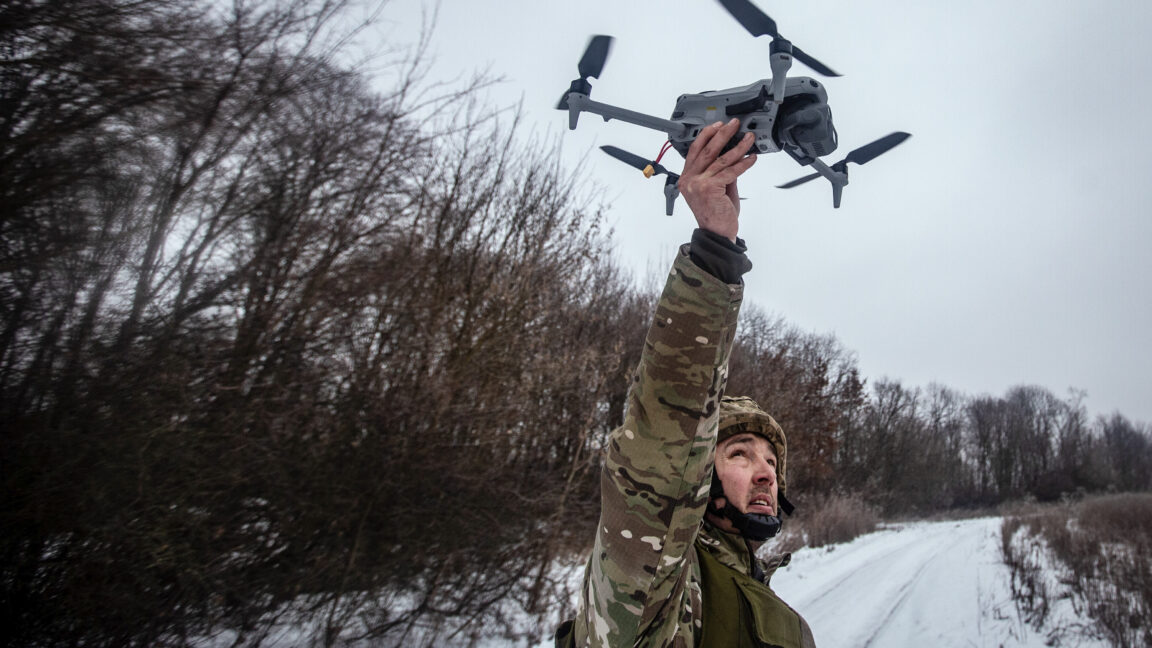
Ukraine's drone manufacturer Aero Center has revealed that fully autonomous drones killed Russian soldiers during a battlefield test two years ago. The company's CEO, Alexander Kokhanovskyy, told New Scientist in an interview that the test used quadcopter drones preprogrammed to fly to a front-line area before activating an AI-powered "Terminator mode" to seek out and attack any target in the given area.
Kokhanovskyy said there was no video feed or other data showing what the drones targeted. However, human-piloted drones sent to check the aftermath found "a couple" of dead Russian soldiers, which led to the conclusion that the fully autonomous drones had killed them.
A Ukrainian military commander told New Scientist that his drone pilots only use semi-autonomous systems, with humans always making crucial control decisions. He also emphasized Ukraine's commitment to international humanitarian law and the military's careful decision-making to prevent civilian casualties.
The one-time nature of the experiment is understandable given practical limitations and international law. Sending fully autonomous drones to attack anything in a given area without human intervention requires careful planning and risks friendly fire or civilian casualties. It is also unclear how effective these drones were compared to human pilots.
There is no commonly agreed definition of lethal autonomous weapon systems. The US Department of Defense defines them as weapon systems that, once activated, can select and engage targets without human operator intervention.
Currently, both Ukraine and Russia field many FPV drones controlled by human pilots using VR goggles. However, a growing number of drones incorporate autonomous capabilities for navigation and sometimes targeting, while humans maintain overall control. Ukraine's Ministry of Defense reports launching over 5,000 drone strikes monthly at ranges over 20 km, relying heavily on autonomous navigation to counter Russian electronic warfare and GPS jamming.
According to Kateryna Bondar, a former advisor to the Ukrainian government, fully autonomous weapons are not yet a battlefield reality, but drones with certain autonomous capabilities are increasing. Ukraine's defense industry focuses on training small AI models on small datasets for use on cheap chips, enabling autonomous functions like navigation and target recognition on small FPV drones, long-range strike drones, and even uncrewed ground robot turrets.