German intelligence officers are approaching some Russians for interviews after airport passport control
Since at least early September 2026, German intelligence officers have been inviting some Russian citizens to answer questions after passport control at airports. About 15 cases are known, and the purpose remains unclear.
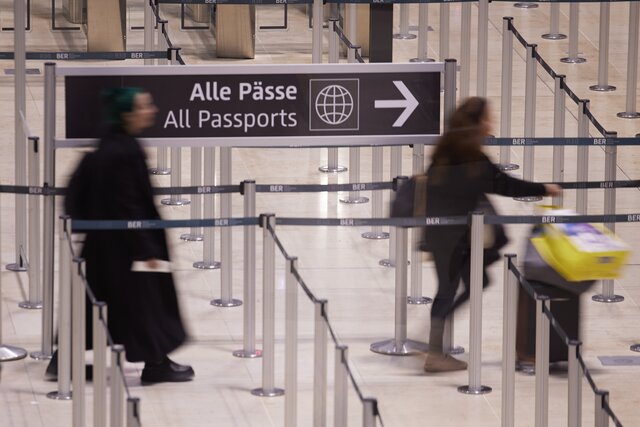
German intelligence officers have been approaching some Russian citizens at the country's airports since at least early September 2026, asking them to answer questions after they clear passport control. Meduza, an independent Russian-language outlet, reports that about 15 such cases are known, though the scale and purpose of the interviews remain unclear.
How the interviews work
Alina (not her real name), a student living in Berlin, flew from Tbilisi via Istanbul on September 9. After passport control she was taken to a room where two plainclothes men and an interpreter asked her to put her phone in a sound-muffling pouch. For roughly 20 to 30 minutes she was asked what she does in Germany, what her parents and friends do, when she was last in Russia, what she thinks of the current situation, and whether she has ties to Russian intelligence or the military. They thanked her afterward. She never learned the purpose.
The magazine Holod reported in early November on another woman who was questioned for an hour in Berlin about her views on Russia, whether mobilization had affected her family, and whether she had noticed rising prices. China scholar Alexey Chigadaev, a Meduza contributor, was approached at Frankfurt Airport on September 11. He agreed because he had two hours before his train. The questions, he said, were very vague: about family, the war in Ukraine and Putin.
Some travelers declined. One woman, on learning the interview was voluntary, refused, and the encounter lasted about three minutes.
Possible background
In early August, a drone carrying explosives was found at Leipzig airport near a Ukrainian An-124 cargo plane loaded with ammunition; ten days later another drone with traces of explosives turned up. In September Germany blamed Russia for the attempted sabotage and closed the Russian Consulate General in Bonn and the Russian House in Berlin. Foreign Minister Johann Wadephul then announced additional entry checks for Russians without specifying them.
The Federal Office for the Protection of the Constitution, Germany's domestic intelligence agency, confirmed it conducts some of the interviews, citing a persistently high threat level. The foreign intelligence service BND did not respond. Politician Andrei Pivovarov claims that BND officers asked one woman to sign a cooperation agreement; she refused and was later denied entry to the Schengen Area. Human rights activist Anastasia Burakova of Kovcheg said risks for those interviewed are small.