Government to decide on extra funding for private school teacher pay
The Latvian government plans to decide on 10 November on additional state funding for 16 private schools that did not receive the planned money for teacher salaries under the new school funding model. The changes would affect 432 children.
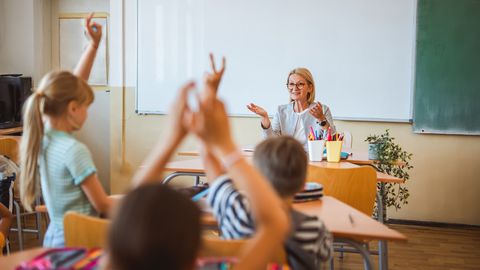
The Latvian government is due to decide on Tuesday, 10 November, on granting additional state funding to 16 private educational institutions. According to Tomass Tomševics, adviser to Education and Science Minister Ilze Indriksone (National Alliance), as told to the LETA news agency, the aim is to cover teacher pay at schools that were left without part of their planned money under the new school financing system.
The proposal prepared by the Ministry of Education and Science would waive the minimum requirement of 15 pupils for certain groups of classes in the 2026/2027 school year and recalculate state funding for teachers' salaries. The changes would affect 432 children.
Why the changes are needed
The changes are linked to the introduction of the new school funding model "Programme in School" ("Programma skolā"). After the new rules took effect on 1 September this year, several private schools did not receive the planned funding for salaries in classes that lacked enough pupils.
The ministry's calculations show that this would require just under 45,000 euros a month. The total amount and its source are still to be clarified. Draft documents the ministry circulated for approval on 6 November propose reallocating 537,444 euros from programmes intended for social support to teachers in case of school reorganisation and for free lunches for primary school pupils. Those programmes are forecast to have a surplus.
About the "Programme in School" model
The teacher pay reform was announced in 2023, when the education sector was overseen by the "New Unity" party alliance. Its goal is to reduce inequality among teachers, since pay rises under the previous "Money Follows the Student" model depended on the number of children in each municipality.
The model was partly introduced from 1 September 2025 and will be fully implemented from 1 September this year. An additional 45 million euros is earmarked for it in 2026, with more needed in later years. Schools that meet the criteria on pupil numbers in classes and class groups, as well as requirements on school size and structure given their location, will receive full state funding.
Developing the school network criteria sparked wide debate. Representatives of various political forces, municipalities, sector organisations and residents have repeatedly objected to the ministry's minimum pupil number criteria, citing fears of school closures, especially in regions and rural areas.