Lithuania's storm response exposes gaps in readiness for a possible military attack
A powerful storm in Lithuania killed one person and left more than 250,000 without electricity, exposing weaknesses that officials say could be even more critical in the event of an armed conflict.
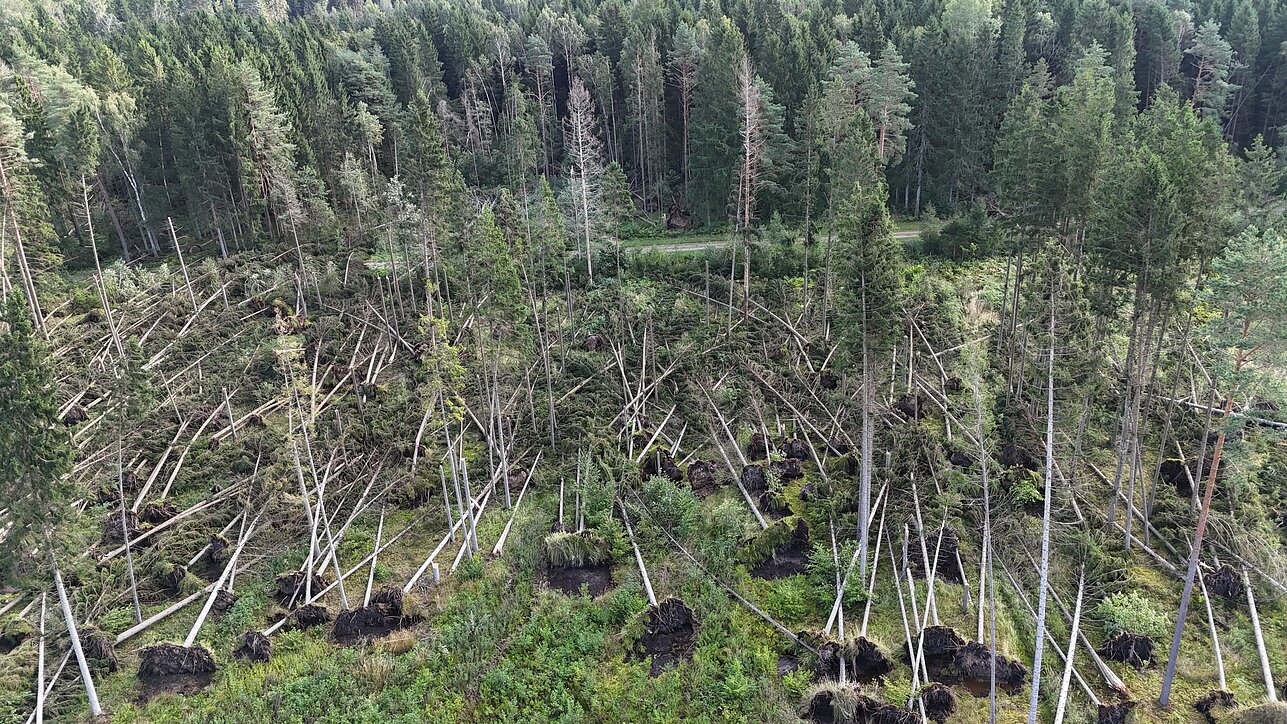
A severe storm recently struck Lithuania, killing one person and leaving over 250,000 residents without electricity, with some still experiencing outages. Laurynas Kasčiūnas, deputy chairman of the Seimas National Security and Defence Committee, said society needs to change its mindset: instead of expecting the state to provide everything, every family should have its own defence plan and necessary equipment.
The municipality of Kazlų Rūda in western Lithuania was among the hardest hit. Its outpatient clinic, along with nearby institutions and residents, lost internet access, disrupting e-health services and forcing doctors to write prescriptions by hand.
Infrastructure weaknesses
Renaldas Radvila, head of electricity distribution operator ESO, acknowledged that society is not prepared for such disruptions, citing a lack of generators and reliance on a single power source. To prevent future blackouts, ESO would need to move 6,000 kilometres of cables underground, at a cost of half a billion euros. In the meantime, ESO offered generators, but Kazlų Rūda mayor Mantas Varaška said 200 generators make little difference when 270,000 consumers are without power, and many municipalities declined the offer to avoid creating tension among residents.
Since Russia's full-scale invasion of Ukraine, experts and officials have repeatedly urged residents to be ready to survive three days without outside help. Yet shortages of water, food and medicine were reported in several municipalities within just days of the storm.
Paulius Rinkevičius, an expert with the Civil Protection Board of the Fire and Rescue Department, noted that residents received advance storm warnings but not everyone used the time to prepare, such as securing loose objects or arranging alternative power sources.
Vilmantas Vitkauskas, head of the National Crisis Management Centre, said some institutions, including certain hospitals, used the storm as a real-life test of their contingency plans, though problems emerged elsewhere — radios used by some public security officials failed after telecommunications operators ran out of backup power days after the storm. He added that while natural disasters cannot be directly compared to armed conflict, electricity infrastructure has been and will remain a potential target.
Prime Minister Mindaugas Sinkevičius said the immediate priority is dealing with the storm's aftermath, after which authorities will review what went wrong and why.


