Vilnius TV Tower struck by lightning 11 times more often than surrounding area
Lithuania's meteorological service says the country's tallest structure, the Vilnius TV Tower, attracts lightning far more frequently than its surroundings. Its lightning protection system has so far kept staff and visitors safe from any recorded injuries.
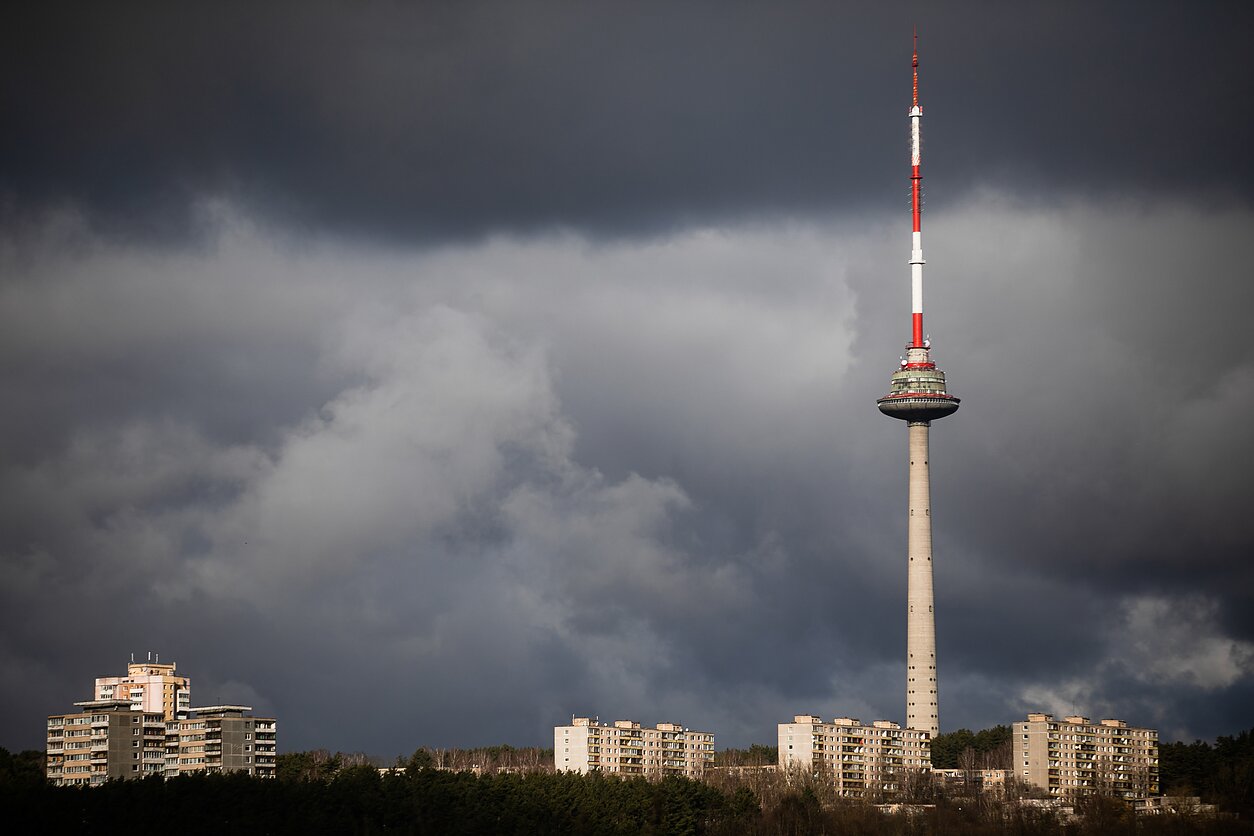
After thunderstorms swept across Vilnius over the weekend, producing dramatic lightning and widespread damage, Lithuanian meteorologists have highlighted the unusual role played by the capital's tallest building.
Gytis Valaika, chief communications specialist at the Lithuanian Hydrometeorological Service, referenced a 2023 study showing that the 326-metre Vilnius TV Tower is struck by lightning around 11 times more often than the surrounding area. He explained that lightning always follows the most conductive route to the ground, and because the tower sits on a hill, rises to a great height and includes a grounding system, it becomes an especially frequent target. At the same time, the tower offers some protection to nearby areas by drawing strikes that might otherwise hit surrounding locations, though it does not remove the danger completely.
Exact tally unknown
Valdas Kaminskas, communications director at the state-owned Radio and Television Centre, said no precise count of strikes exists, but the tower has been hit hundreds of times over the years. It was fitted with a lightning protection system during construction, built to capture strikes and channel the electrical discharge safely into the ground through lightning rods that undergo regular inspection.
Kaminskas noted that people inside the tower usually do not notice a strike, since the system redirects the current safely and prevents dangerous electromagnetic effects indoors. He said he was unaware of any injuries to staff or visitors caused by lightning hitting the structure.
Valaika added that lightning across Lithuania also frequently strikes bodies of water such as rivers, lakes and springs, along with tall trees, wind turbines and quarries. Since comprehensive lightning-strike data has only been gathered since around 2011-2012, he said it remains too early to identify other statistically reliable lightning hotspots nationwide, noting that 20 to 30 years of observation would be needed for more reliable conclusions.