Eye worms mated in a man's eyes and were removed just as larvae began bursting out
Doctors reporting in the New England Journal of Medicine found adult Thelazia callipaeda eye worms in a man's eyes and removed them with fine forceps. No antiparasitic drugs were needed, and two months later his symptoms were gone.
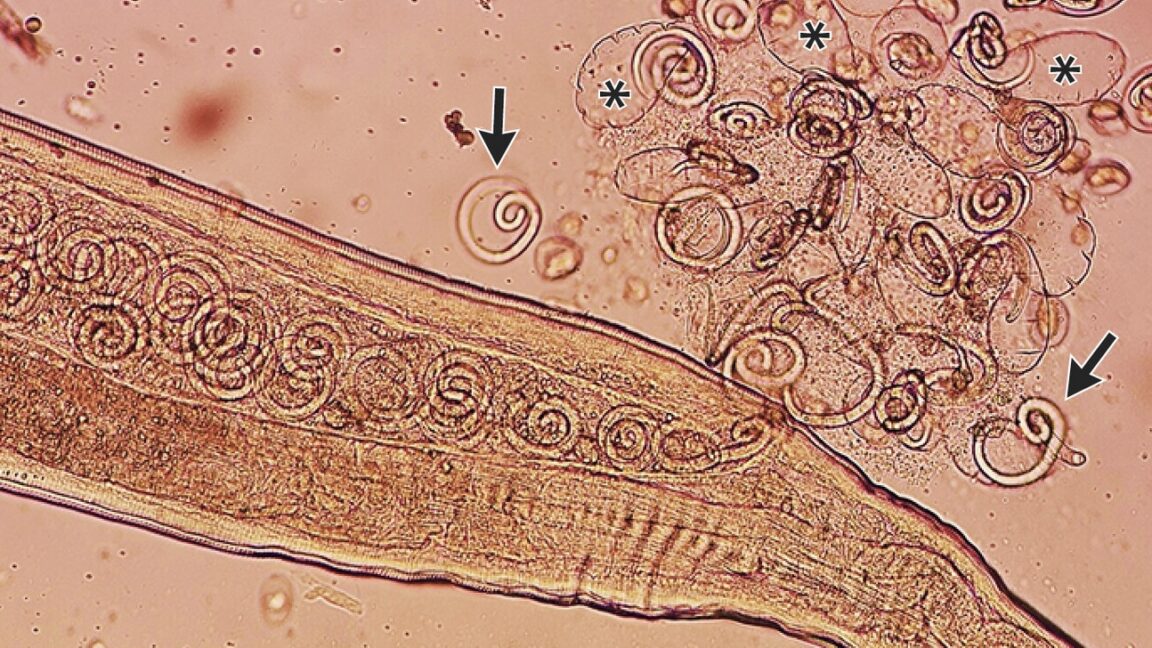
A case published in the New England Journal of Medicine in 2026 describes a man whose eyes were infested with adult Thelazia callipaeda, a parasitic eye worm. Doctors removed the worms with fine forceps. Some of the females were pregnant and released eggs and larvae as they were taken out. The case shows how this parasite can live and reproduce directly on a human eye, and that treatment can be fairly simple.
How the worms develop
The worms' life cycle depends on flies that feed on the eyes of animals, lapping up tears and other secretions. When a fly feeds from an infested eye, it can pick up the worms' first-stage larvae. Inside the fly, the larvae molt twice and become third-stage larvae. They then move to the fly's mouthparts and wait for the fly to land on a suitable moist eye. There they leave the fly, settle in, and molt once more to become adults. The adult worms live and mate directly on the surface of the eye.
What doctors found
The removed worms measured 11 to 20 millimeters in length. Unlike many other worms, female T. callipaeda are ovoviviparous, meaning embryos develop in eggs inside the female's body. The females release large broods of tightly coiled first-stage larvae. Some of the females taken from the man were full of eggs containing embryos. Doctors noted that coiled larvae began bursting out of some of them after they had been pulled from his eyes. The males were identified by their copulatory spicules, needle-like structures used in mating.
Outcome
Because all the adult worms were removed, the infection was over. No antiparasitic medication was required, even if some larvae had been left behind. At a follow-up appointment two months later, doctors found that all of the man's eye symptoms had resolved and that no worms remained.