Farmers’ Saeima: 2026 Is Another Difficult Year for Latvian Agriculture
The government has declared a state of emergency in agriculture because of heavy rain. A representative of the Farmers’ Saeima says it brings no direct compensation but may speed up procedures, while winter crop sowing is far behind plan.
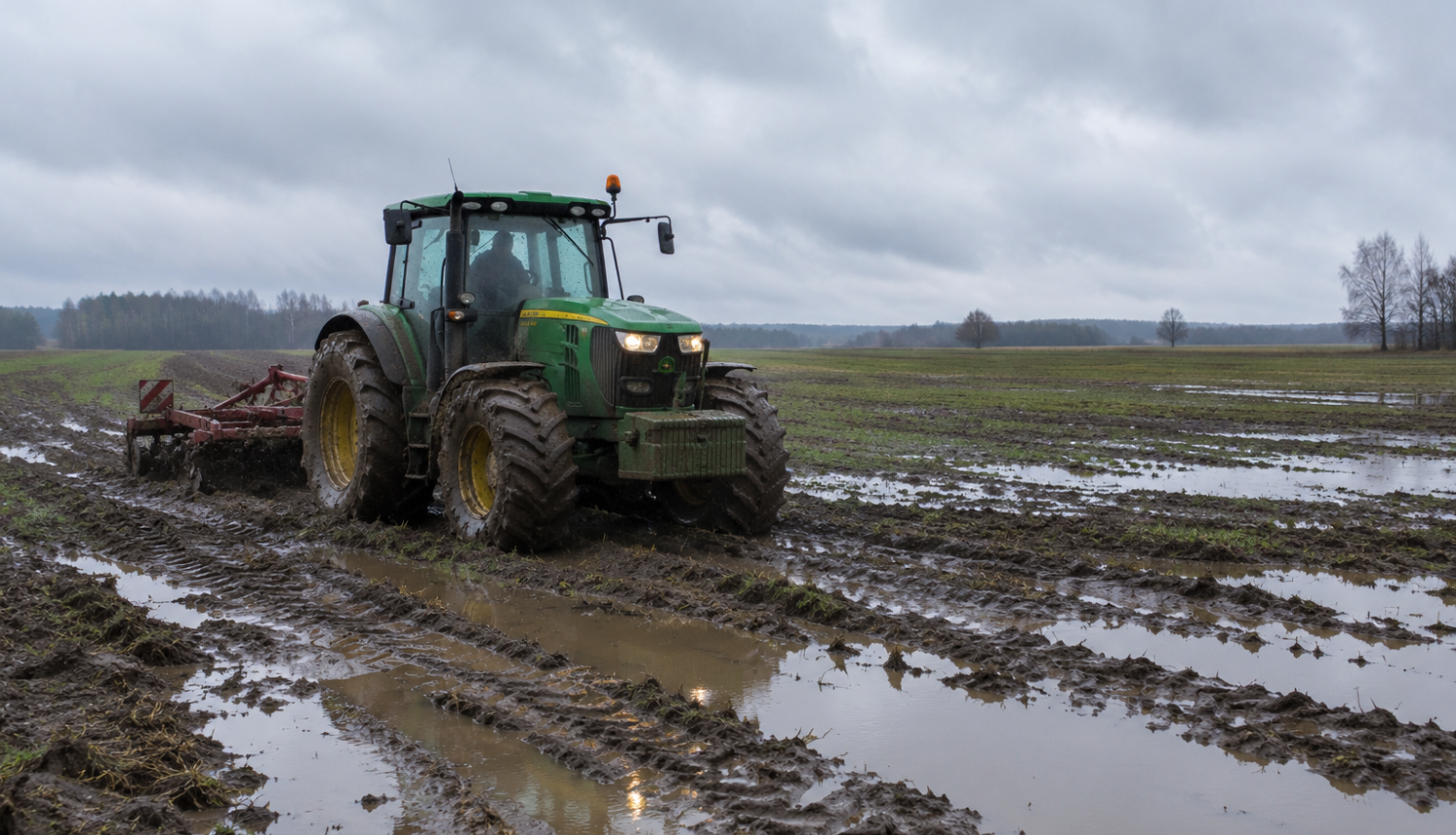
The government has declared a state of emergency in agriculture due to persistent rainfall, and it will remain in force until 10 January next year. Maira Dzelzkaleja-Burmistre, deputy chair of the board of the Farmers’ Saeima association, told the news agency LETA that 2026 is yet another hard year for the sector.
What the emergency status offers
She stressed that the decision does not guarantee compensation for farmers. It does, however, make it easier for the Rural Support Service to agree on relaxed conditions at European level for receiving subsidies. It may also speed up municipal requests for crisis fund support, for example in northern Kurzeme, where roads and drainage systems were damaged by floods. Banks, she said, assess each client individually, but the status may help their parent companies understand the scale of the problem.
The industry is urging the Ministry of Agriculture to approach the European Commission for support from the crisis reserve. Dzelzkaleja-Burmistre noted that the queue for these funds is long and that money received previously was small compared with the losses. Latvia has been allocated just under €5.5 million from the reserve due to higher fertiliser and fuel prices.
Harvest and sowing
The grain harvest is better than in previous years, but toward the end of harvesting, wet conditions made it impossible to obtain good-quality grain. Part of the potato crop is still in the fields and will probably not be fully harvested. The vegetable harvest is considered satisfactory, though storage will be a challenge, and the pumpkin crop is small.
Only about 40% of planned winter crops have been sown, and in Kurzeme and Latgale just 20–30%. Hopes of reaching 60–70% will most likely not be met. This means larger areas of spring crops and a lower total harvest next year.
Costs and prices
Input prices are high, while agricultural produce prices are historically low. The sector wants the reduced excise rate on farm fuel retained, no biofuel blending in agricultural fuel, and other measures to ease fuel costs. Dzelzkaleja-Burmistre believes food will become more expensive overall, but says shop prices are influenced more by European market developments and retail markups than by what farmers are paid.


