Nordic rift over Putin call: Denmark and Sweden criticise Finland and Norway's move
Finland's president and Norway's prime minister held a 90-minute phone call with Russian President Vladimir Putin on Tuesday, drawing public criticism from Denmark and Sweden. The row exposes Europe's divisions over whether, and through whom, to talk to Moscow about ending the war in Ukraine.
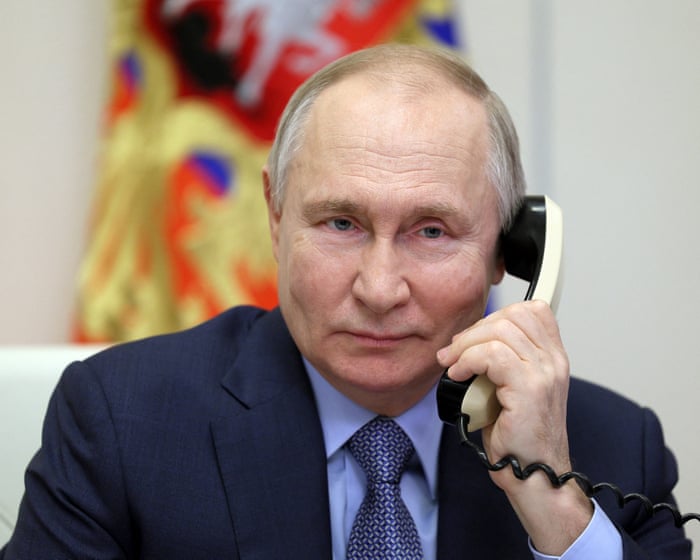
Finland's president, Alexander Stubb, and Norway's prime minister, Jonas Gahr Støre, spoke by phone with Russian President Vladimir Putin for 90 minutes on Tuesday. It was a rare high-level conversation between the Russian leader and Ukraine's European allies. The two Nordic leaders stressed that the call was made on Ukraine's behalf and that allies had been told in advance. Their neighbours Denmark and Sweden nonetheless reacted critically, highlighting how divided Europe is over direct dialogue with the Kremlin.
Criticism from neighbours
Denmark's prime minister, Mette Frederiksen, said she was very sceptical of the independent initiative and noted that the call had not been coordinated with Copenhagen. Sweden's prime minister, Ulf Kristersson, also criticised the step, saying he had not been informed beforehand. Arkady Moshes, director of the Russia programme at the Finnish Institute of International Affairs, said that by Nordic standards the rift is quite serious.
Analysts blamed mixed messages about the purpose of the call. It was first presented as a way to relay Ukrainian messages to Putin, but Støre later also cited the management of shared fish stocks in the Barents Sea and security along the common border. Stubb said the conversation was also meant to prevent misunderstandings between Russia and its Nordic neighbours.
Europe's approach to Moscow
Since the summer, European leaders have discussed, with little progress, whether to appoint a representative to negotiate directly with Moscow. The question has become more urgent as US President Donald Trump has moved closer to Moscow in recent weeks at Ukraine's expense. A new round of peace talks is expected in Abu Dhabi next month, and European governments fear being sidelined.
France has long favoured keeping a channel to Putin open, while Germany and Britain are more cautious. The Baltic states and the EU's foreign policy chief, Kaja Kallas, worry that renewed high-level engagement could ease pressure on Moscow without winning concessions. For now, no one has a clear mandate to negotiate for the EU's 27 member states.
Kristi Raik, director of the Estonian thinktank ICDS, warned that the Kremlin may read the move as a sign that Europeans and Ukrainians are in trouble. Moshes cautioned that Putin's willingness to take the call does not signal readiness to compromise, since, in his words, Putin's plan A is a military defeat of Ukraine.

