Did fossilized poop help kickstart the evolution of complex animals?
Researchers Kimming and Bicknell argue that fossilized fecal pellets from 540 to 494 million years ago may have delivered nutrients to deep ocean waters, fueling the Cambrian explosion of animal diversity. The finding helps explain why complex marine life expanded so rapidly during that period.
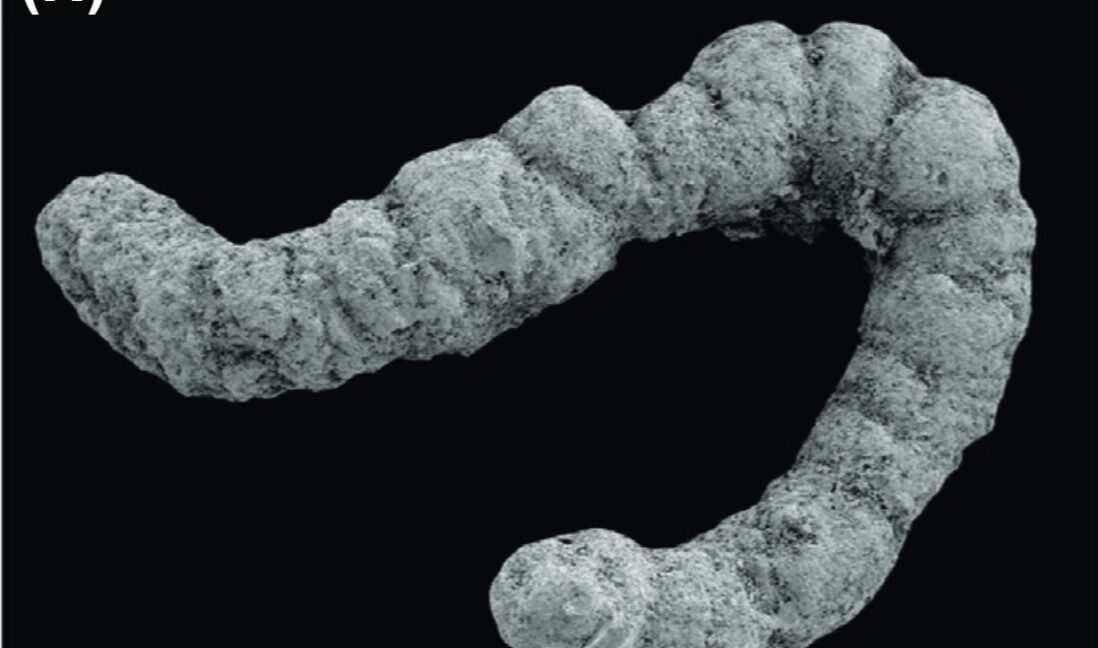
More than half a billion years ago, Earth's oceans were home mostly to simple creatures resembling sponges or jellyfish, living in sunlit surface waters or the shallowest parts of the seafloor. These early animals had no organs; they simply waited for tiny particles of plankton or bacteria to drift into their single body opening, where cells would engulf and break down the food. What they released back into the water was largely just chemical waste from cellular metabolism rather than nutrients other organisms could use, leaving the deeper ocean largely uninhabited due to a lack of food.
The arrival of digestive organs
Around 580 million years ago, some animals began evolving simple organs that let them swallow larger chunks of food and digest them outside their cells in a basic but groundbreaking gut. This allowed animals to eat more at once and support more complex bodies, but it also created a new byproduct: waste that needed to be expelled. That marked the beginning of animal feces.
What fossilized droppings reveal
Paleontologists have so far uncovered Cambrian coprolites—fossilized feces—at roughly 35 sites worldwide, dating from about 540 to 494 million years ago. These specimens range from microscopic to several centimeters in size and take varied forms, including elongated, cylindrical, ellipsoid, and circular shapes, as well as scattered "carpet"-like deposits. Some larger coprolites contain fragments of shell or exoskeleton, offering clues about the diets of the animals that produced them. One notable example, dated to between 520 and 506 million years ago and found in what is now Australia, still contains remnants of a trilobite.
Researchers Kimming and Bicknell suggest that the emergence of fecal pellets supplied deeper waters with additional organic carbon along with iron, nitrogen, and phosphorus. This, they argue, likely boosted support for marine animal life and may have contributed to the diversification and growth in biomass seen during the Cambrian period. The wide variety in the size and shape of fossilized feces suggests the animals producing it were similarly diverse, though scientists have yet to match most coprolites to specific Cambrian species.