New drone exploits human vision to become nearly invisible
Researchers at Northwestern University have developed a drone that spins so quickly the human eye can barely perceive it. The Phantom Twist could mark a step toward low-visibility aircraft, though it still has limitations.
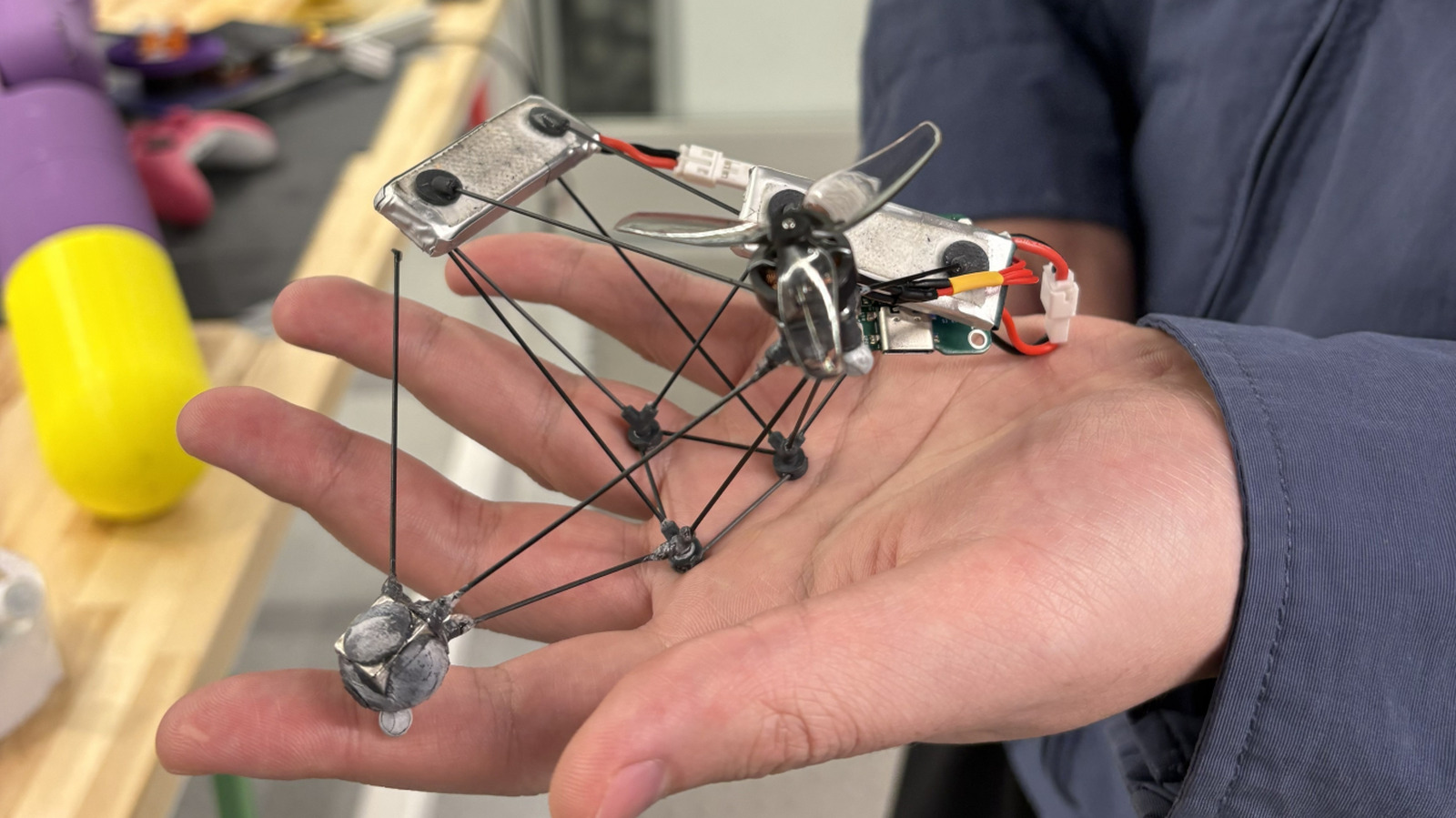
Scientists at Northwestern University say they have moved closer to making drones visually imperceptible. Their experimental aircraft, called Phantom Twist, relies on shortcomings in human sight rather than camouflage or cloaking technology.
The drone rotates up to 25 times per second. Its propeller and main body spin in opposite directions, and there are no stationary components for the eye to lock onto. According to the researchers, this makes it about ten times harder to see than a conventional quadcopter. They describe the visual result as a ghostly smudge that blends into the background, similar to the faint outline seen in the Predator films.
The device is not completely invisible. It produces an audible whirring noise, and its wires and support rods remain partly visible.
The Phantom Twist was presented at the Robotics: Science and Systems conference in Sydney, Australia. The work, partly funded by the National Science Foundation, came from Northwestern's McCormick School of Engineering.
To create the design, the team used a computational model that generated 20,000 configurations. Artificial intelligence helped narrow those options, and simulations tested how well the drone could be seen over different terrains using a model of human perception. The 500 least visible designs were refined, and one was built for physical testing.
The drone's components are arranged at different heights with empty space between them. The propeller spins against the direction of the rest of the drone, making sure rotations are not synchronized. This takes advantage of the time the eye needs to process motion, causing the few solid parts to be visually averaged with the background into a faint haze.
The developers plan to explore transparent materials and quieter propulsion. They suggest such drones could be used to observe wildlife without disturbing nesting birds, or to inspect infrastructure without interrupting operations. The team also acknowledges the obvious military and surveillance possibilities, noting that armed forces worldwide are already racing to develop automated drone warfare. The researchers say the practical question is not whether invisible drones will be deployed, but when and how militaries incorporate them into their arsenals.

